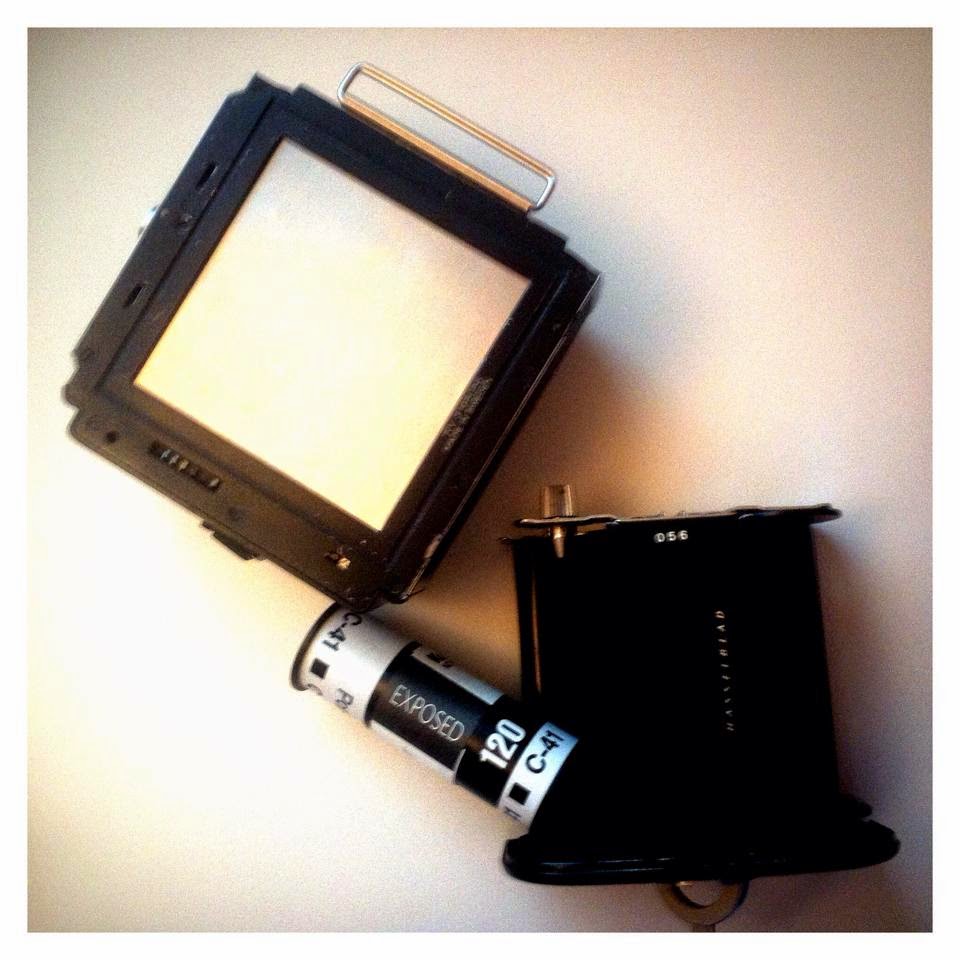
Showing posts with label Hasselblad. Show all posts

Wednesday, November 23, 2016

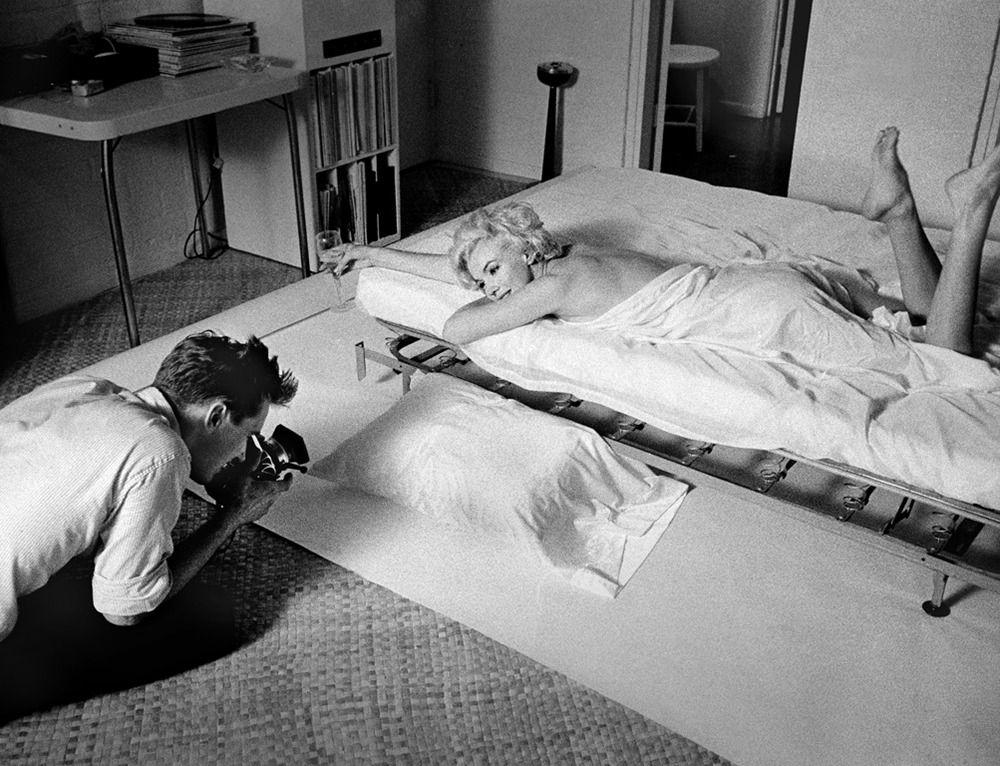
Hasselblad: My evening with Marilyn...

Many iconic photographs have been taken using Hasselblad equipment. Now and in the past.

Douglas Kirkland took, in the 1960ties, pictures of Marilyn Monroe in intimate atmosphere.

Read the article at hasselblad.com

Wednesday, June 29, 2016

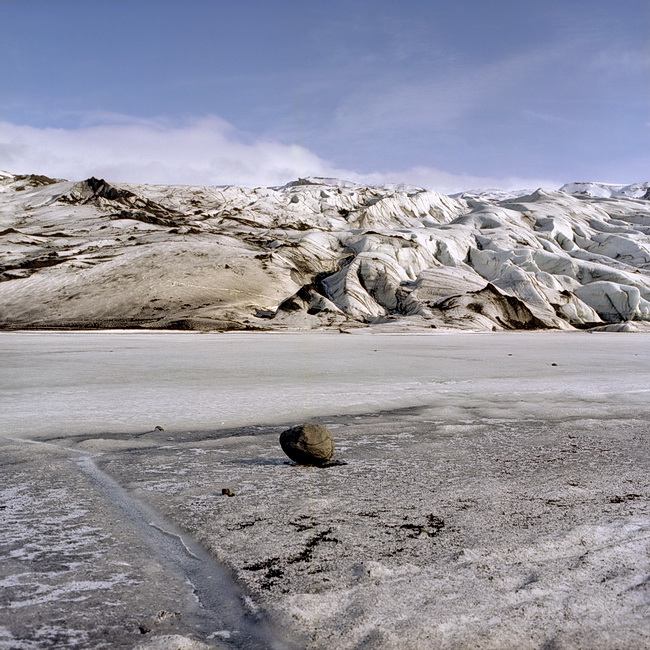
Kornfeld

Isn't it beautiful? - One of my Hasselblad photographs on Kodak Ektar 100 film.

Kornfeld by Andreas Müller on 500px.com
Kornfeld - Andreas Müller (500px)


Sunday, June 26, 2016

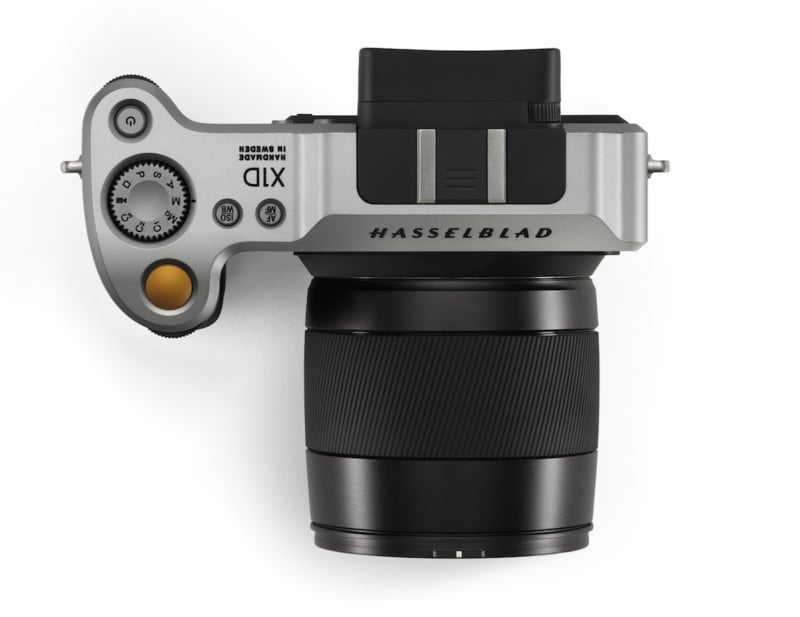
Hasselblad X1D - Mirrorless Digital Medium Format

Camera manufacturer Hasselblad from Sweden just recently launched the Hasselblad X1D.
X1D is the first mirrorless digital medium format camera.

The camera comes with a 50MP CMOS sensor in a housing no larger than a full format DSLR camera.

The sensor has a dimension of 44 x 33m with a single pixel size of 5.3 x 5.3 micro meter.

Together with the camera a new series of lenses has been introduced. This XCD series of lenses are optimised for this mirror less setting. However, current H System lenses fit the camera using an optional adapter.

"Small enough to take anywhere, powerful enough to capture anything."

This invention brings high end glass and sensor technology to a handy form factor which allows the use of digital medium format in many more situations than current solutions.

Saturday, May 14, 2016

Studio Photography - Featuring the new Hasselblad H6D

Karl Taylor shows how he uses the new Hasselblad H6D camera to do a studio shoot of cans with color colliding in the air.
An incredibly impressive setup to produce a most impressive image. A challenge for high speed photography resulting in one of the most dynamic pictures I have ever seen for a studio setup.


Sunday, May 8, 2016

Hasselblad Camers - The New H6D

Hasselblad high end cameras ever occupied the high end segment of professional photography.
Many very famous photographs have been taken using Hasselblad.

The following video features the new Hasselblad H6D camera which comes at the price of a decent car.
The Hasselblad system offers medium format digital sensors with as much as 100 megapixels. Cutting edge glass, and many features designed for the professional photographer.


While this digital monster probably just remains a dream for most camera addicts the older analog versions of Hasselblad cameras become quite affordable nowadays.
Here another video explaining the functioning of this piece of mechanical precision engineering.


Saturday, March 12, 2016

Curated 6x6 medium format photography - by Susanne Treml

Photographer Susanne Treml is curating 6x6 medium format photographs on 500px. Her moto is "analog love in digital times". It perfectly describes the motivation for analog photography in todays times.

To date she is sharing more than 300 images in her "6x6" gallery among these some very impressive photographs.


Sunday, February 21, 2016

Hasselblad photography - view through the view finder

Since I started #myhasselbladproject exploring analog photography using my 1976 Hasselblad 500 c/m camera, I collected images from Hasselblad cameras - mainly images showing the view through the view finder - at pinterest (All around Hasselblad medium format analog photography).

Below my Hasselblad pinterest board:


Thursday, February 11, 2016

Experimental film - Lomography Film

Referring to my earlier post on using experimental film (link) I can now present some results.

While I did not yet expose the Rollei Infrared and the Crossbird Creative film I have results for the Lomography black and white and color films.

The first version of the Lomography Earl Grey 100 black and white film I exposed in the little town of Rheinfelden. The results are images with good contrast and very fine grain.


2015 December - Rheinfelden - Images by Andreas Mueller

Lomography Color Negative 100 filmes I exposed one roll in Bern on a sunny but cold winter day and the second one in Aarau on a cloudy winter Sunday. Results are sharp fine grained images with a color profile including a rather strong contribution of red and brown tones. While this could be a result of the spectrum of the winter sun it would be interesting to see the color performance of this film in bright sunlight on a Summer day.


2015 December - Bern - Images by Andreas Mueller


2016 January - Aarau - Images by Andreas Mueller

Sunday, January 24, 2016

Film is a disease

Follow the following link to play this wonderful Video on the addiction towards film photography: https://vimeo.com/nunomarques/filmisadisease

Thursday, January 7, 2016

Travel Photography using Hasselblad and Film

Here a blogpost on experimenting with a Hasselblad and film on a trip to Rome. - by Kirk Tuck

The Visual Science Lab.: What I learned when I dragged a Hasselblad on vaca...: Rome. It was 1991 and most of my assignments were being done on medium format film with one or another camera from Sweden.  There&#3...


And a second blogpost on using Hasselblad 503cx in Iceland. - by Gary Sermonic

http://filmadvance.com/2015/05/the-hasselblad-travel-camera/ "I can't think of a worse choice for a travel camera." That's a direct quote from an internet discussion about the Hasselblad. ...

Thursday, December 24, 2015

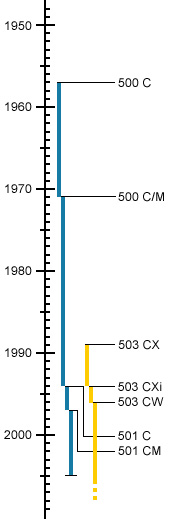
Hasselblad 500 history

Learn something about the history of Hasselblad camera models. S. Heymann and Q.G. de Backer compiled a concise tabulated history including a serial number look up for manufacturing years. - Follow the link.

My Hasselblad 500 c/m (Made in Sweden by Victor Hasselblad) was built in 1976. The 80 mm f2.8 Carl Zeiss T* Planar lens I am using is from 1981.

The 500 c/m model has been manufactured from 1970 until 1994. And was a follow-up of the 500 c model adding the possibility of interchanging the focusing screen by the user.

Hasselblad company was founded in Gothenburg, Sweden in 1941. Right after world war II.

Moon buggy, Apollo space program
The most famous use of Hasselblad equipment was during the NASA Apollo space program. Some of the most spectacular images from manned exploration of space have been taken using Hasselblad cameras.

The Hasselblad 500 c/m model is still a quite popular camera in film photography. No longer being manufactured since more than 21 years, the market for 500 c/m cameras is still there. On eBay a good maintained Hasselblad 500 c/m set including a 80mm lens goes around 1'000 Euro. Similar as for old used cars there can  also be found a market for spare parts and repair services for old mechanical cameras.

#Bike by Joe Hirtenfelder on 500px.com
#Bike by Joe Hirtenfelder
(500px: Hasselblad film photography)
■
by Shinya
(Flickr: Hasselblad film photography)
Hasselblad cameras are still widely used. A search for "Hasselblad" in the film photography section at 500px yielded a number of more than 2'000 analog images.

Among these Hasselblad analog photographs there are a lot of still life, landscape, and people images.

My own Hasselblad 500 c/m analog photography can be found at: andreasrmueller.com


Tuesday, December 15, 2015

Calendar 2016

Using my Hasselblad 500 c/m analog photography throughout the year I compiled a little wall calendar and printed a limited edition of four copies.

- I am still missing a print on demand and self publishing solution for a square calendar layout.

It is a 21 x 21 cm format designed using the proprietary software of bookfactory.ch which runs on Mac OS X and can do among other formats square calendar layouts.

The result is very good and I will use the four copies as presents. The 6x6 cm medium format shot using my Hasselblad camera is visually very effective in a square print format.

2016 Calendar 

Sunday, November 15, 2015

Landscape photography using a Hasselblad 500 c/m - the results


Yesterday the developed and scanned pictures from my landscape photography experiments applying different types of film have arrived.

One first comment: Once more I notice the value of using a tripod even in good light conditions.
All the images were shot hand holding the Hasselblad 500 c/m camera using the waist level finder.

Kodak Ektar 100
Even when keeping an eye on shooting only at shutter speeds faster than 1/60 given the level of detail in the here explored scenics it is hard to reproduce photographs with a high level of detail sharpness.

The fall coloured trees (see the picture of a walnut tree on the left) in the landscape with their tiny details in the texture of colourful leafs are a challenge which only can be overcome using a stable support. In addition weather conditions such as wind might add quick movements to the leafs which results again in motion blur.
Fujichrome Velvia 100

Comparing to my recent  lavender field pictures - see post from August 16th (and sample picture on the right) - where I was shooting every picture using my tripod and fast shutter speeds, the current results are a bit disappointing. Shooting the lavender fields introduced the same, maybe even a bit higher, challenge to capture details in texture of these beautiful plants.
Fujichrome Velvia 50

Applying Fujichrome Velvia film as expected gives rather blueish results a bit less warm in color than the Kodak Ektar 100. The spectrum of the Fujichrome clearly exhibits more contribution at the blue side of the color spectrum, while the Kodak Ektar is more prominent at the yellow/red end of the spectrum.
Kodak Ektar 100

As specified both films exhibit an equally fine granulation. However, the grain can only be observed in bright areas of the sky, as well as in extreme dark green areas of trees in the forest with adequate magnification.

To fully capture the impression of a autumn landscape on a sunny day I would prefer the Kodak Ektar 100 film given the better performance for yellow, brown, and red colors.

Fujichrome Velvia 50
The Fujichrome Velvia was a good choice for the purple lavender fields (compare to picture shown above) as well as for landscape shots where contrast matters, such as in the cloudy evening shot from the Lake Lucerne and Mount Pilatus (see picture on the left).
This picture was extremely difficult to take since there was the very localised, but blurred due to the sky coverage, bright direct light from the sun combined with the very dark south-east facing mountainside in almost true black, and the dramatic sky coverage almost turning the scene into a night shot. It was not very clear to me on choosing the right exposure.
What I wanted to get out of this picture was the dramatic sky combined with the reflection on the surface of the lake, and the band of fog at the bottom of the mountain.

Ilford HP5 400 b/w
Using the Ilford HP5 400 black and white film was a good choice for pictures in the forest where only little light was available in the late afternoon when the sun is low. Given the high contrast between direct sunlight falling on plants and extreme darkness in the shadow this was a real challenge for the Ilford film which is not known to be a high contrast film.
Ilford HP5 400 b/w

As the picture on the right shot through the trees directly into the setting sun shows, the film exhibits good detail a very fine grain but not much graduation between extreme bright and extreme dark.

The image on the left capturing a scene with less extreme lightning conditions shows the film is capable of representing a well balanced scenery in terms of light and color in black and white.

Comparing the two black and white images shows that the Ilford HP5 400 is good under low light conditions. However, the result is much better for a scenery with diffuse light than for one under high contrast conditions.

See more images from this series of analog film photography at my website.
- Rigi Kaltbad
- Autumn landscape

Thursday, November 5, 2015

Landscape photography using a Hasselblad 500 c/m

It needs patients. - There is no immediate feedback control. - The photographer relies sole on a light meter, the selection of a film with specific characteristics, and on his understanding of exposure. - This is analog film photography.

Two weeks ago, it happened to be perfect fall weather in Switzerland, I took my old 1976 Hasselblad 500 c/m camera and some rolls of film, and went for some outdoor activity.

During fall and winter the low sun leads to interesting ambient light conditions. Lot of contrast, and due to the clear atmosphere also clear and brilliant colours with plenty of contrast.
The vibrant colours of autumn leaves - yellow, red, brown, and green - were just amazing.

I decided to shoot the following different film rolls.

Kodak Professional Ektar 100
The technical data sheet claims: "... is the world's finest grain color negative film ... high saturation and ultra-vivid color..." and "... is recommended for applications such as nature, travel and outdoor photography, as well as for fashion and product photography."

Fujichrome Velvia 50 Professional, and 100 Professional
The Fujifilm product bulletin says: "... is a professional daylight color reversal film..." and "... the world's highest level of image color saturation and vibrancy, this film combines superb granularity with resolving power.", "It is especially suited to subjects that demand precision in reproduction and emphasis in colors."

Hence, for the color films I was dealing with the world's finest grain, the world's highest level of color saturation, and resolving power. Both types of film are recommended - among other applications - for outdoor photography.

Spectral density curves Fujichrome Velvia 50

Comparing the spectral sensitivity curves from the film's technical specifications for both types of film shows that both films exhibit similar spectral response in blue and green wavelength area. The red area covers approximately the same wavelength range for both films with the spectral density being narrower for Fujichrome Velvia compared to Kodak Ektar.

Kodak Ektar shows a broad peak between 600 and 660 nm while the Fujichrome Velvia spectrum has a narrow peak at 650 nm.
This explains the experienced difference in color of the two film. The Fujichrome Velvia gives rather blueish results, given the lack of red and the predominance of blue and green (see spectral density charts on the left).

Spectral density curves Kodak Ektar 100
While Fujichrome Velvia is known for its saturation and strong contrast, I  am curious to see the results of Kodak Ektar.


Ilford HP5 Plus - ISO 400 black and white professional film
The package insert speaks of a "...high speed, medium contrast film...", "...suitable for action and press photography..."  - Not necessarily the first choice for black and white landscape photography. If reading through other blog posts. This film is never recommended explicitly. Recommendations go rather for Kodak Tri-X, BW400CN, or Ilford XP2 Super film.
Nevertheless, Ilford HP5 is considered to be a good option since it is a very flexible film yielding "...outstanding sharpness and fine grain under all lighting conditions". It's a medium contrast film and hence probably a good choice to reflect the nuances of colorful autumn leaves and forests in black and white.

Shooting film, time to result can be a bit longer than with modern digital technique. I am still waiting for developed and scanned films to arrive.
Saturday, May 30, 2015

Update to my Hasselblad 500 c/m analog photography gallery

Visit my analog photography gallery for an update with some more winter and landscape pictures on Ilford film.

#myhasselbladproject #hasselblad #analogphotography


Hasselblad 500 C/M - Images by Andreas Mueller

Monday, April 6, 2015

One Roll of Film project

A very interesting project, four Tokyo-based photographers taking the challenge of shooting one roll of 120 film on a old Hasselblad analog camera.

A fantastic idea, documenting the process of taking exceptional pictures. Compared to digital the photographers start to think much more about composition of the image, about the light, about the camera setting, they develop patience, they develop a vision of what they are going to shoot first.

Learning about this project on YouTube and watching the documentary, I became much more aware of what it means to take exceptional pictures, about how to deal with all the details in the process.
It's about really developing the handcraft of the art of photography.

Have a look at the documentary:


Links to respective photographers website:
Mattias Westfalk
Richard Atrero de Guzman, Bahag
Yoshiki Suzuki
Paul del Rosario

Sunday, March 22, 2015

Analog photography project: #myhasselbladproject

In September 2014 I started my analog photography project by ordering a second hand Hasselblad 500 c/m camera from ebay. Not only selecting and ordering the right camera was a challenge, but also finding suppliers for the right film. A next hurdle was finding reliable laboratories which could develop and scan the films.

Follow the photo stream of my analog photography project on Facebook at #myhasselbladproject.

The first five steps of the project journey

0th step: buying a Hasselblad 500 c/m. I found mine on eBay and hoped it would arrive in as good condition as the seller claimed.

1st step: Getting some black and whit as well as some color film.


2nd step: the camera arrived. Everything fully functional. For a camera built in 1976 it is really in good shape.

3rd step: While there are plenty of smartphone apps for light metering, my analog photography project should involve the use of an analog light meter.

4th step: loading the film to the Hasselblad A12 camera back. Not as easy as loading a flash card!
Youtube is a great source of instruction videos, even for a technology of the pre-internet area.


5th step: getting some pictures at my brothers wedding and getting the first film developed.
Here, one film - 12 images - on an index sheet:

And some serious high resolution scans:

More steps to follow applying another classic color film!


Follow the photo stream of my analog photography project on Facebook at #myhasselbladproject.