Follow the following link to play this wonderful Video on the addiction towards film photography: https://vimeo.com/nunomarques/filmisadisease

Showing posts with label analogphotography. Show all posts
Showing posts with label analogphotography. Show all posts
Sunday, January 24, 2016

Thursday, December 24, 2015
Hasselblad 500 history

My Hasselblad 500 c/m (Made in Sweden by Victor Hasselblad) was built in 1976. The 80 mm f2.8 Carl Zeiss T* Planar lens I am using is from 1981.
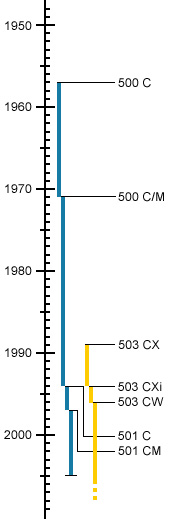 The 500 c/m model has been manufactured from 1970 until 1994. And was a follow-up of the 500 c model adding the possibility of interchanging the focusing screen by the user.
Hasselblad company was founded in Gothenburg, Sweden in 1941. Right after world war II.
 |
| Moon buggy, Apollo space program |
The Hasselblad 500 c/m model is still a quite popular camera in film photography. No longer being manufactured since more than 21 years, the market for 500 c/m cameras is still there. On eBay a good maintained Hasselblad 500 c/m set including a 80mm lens goes around 1'000 Euro. Similar as for old used cars there can also be found a market for spare parts and repair services for old mechanical cameras.
 |
| #Bike by Joe Hirtenfelder (500px: Hasselblad film photography) |
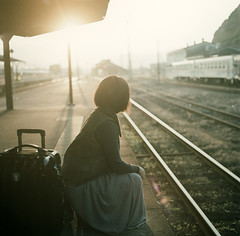 |
| by Shinya (Flickr: Hasselblad film photography) |
My own Hasselblad 500 c/m analog photography can be found at: andreasrmueller.com
Saturday, August 22, 2015
My start into photography
My start intro photography was approximately 27 years ago during a photography class on Saturday afternoons hold by our schoolmaster. In class we learned a lot on photographic techniques around image composition and all about the black and white manual laboratory process.
The course provided free access to analog SLR cameras and lenses, black and white film, a laboratory, and chemicals. This was a paradise for a young and passionate photographer.
The following image gallery shows a selection of scanned negatives from my more than 25 years old self-developed black and white portfolio. All the negatives produced during that period remain still in my archive. And the quality is still good. Sometimes I wonder if my current images stored in digital image archives will be accessible in 25 years time.
The course provided free access to analog SLR cameras and lenses, black and white film, a laboratory, and chemicals. This was a paradise for a young and passionate photographer.
The following image gallery shows a selection of scanned negatives from my more than 25 years old self-developed black and white portfolio. All the negatives produced during that period remain still in my archive. And the quality is still good. Sometimes I wonder if my current images stored in digital image archives will be accessible in 25 years time.
Thinking back to that time - I was just between 12 to 15 years old - I am missing the handcraft, the work with the medium film and chemicals, the pace of the process from composing, shooting towards the finally developed and enlarged photograph on paper.
The step into digital age was not only a change in technology but a complete change in handcraft with respect to the creative process.
Using classic cameras - Ilford Sportsman (1959)
A couple of years ago my father found his very first camera. An Ilford Sportsman 35mm range finder camera from approximately 1962.

 (1) Kodak Professional BW400CN, Black and white negative film (35mm roll, 36 exposures)


When I got the camera into my hands in June 2014 I immediately started shooting using an old Kodak 35mm film which was 10 years expired. I got pretty decent results, even tough the functioning of release and aperture was not very reliable.
These first color images can be found on www.andreasrmueller.com.
Due to the missing reliability I decided the camera to get serviced. And here are the results from a short trip to the Lake Lucerne in Switzerland. Since it is a classic vintage camera I decided to shoot black and white only using two different types of film.
Since Ilford Sportsman is a range finder camera and does not provide any autofocus, focusing at the right distance is sometimes very difficult. Especially for shots with subjects in the foreground and selective focus or narrow depth of field. The built in passive light meter does a good job. So far all the images were well exposed.
The two films applied hier are chromogenic films. These are black and white films designed to be developed in a standard color negative C41 chemistry process.
 (1) Kodak Professional BW400CN, Black and white negative film (35mm roll, 36 exposures)
A very fine grain, high sharpness and broad tonal range film. The film is processed in C41 process.
 |
| Ilford Sportsman, Kodak Professional BW400CN fim: Portrait |

(2) Ilford XP2 Super 400, Black and white negative film (35mm roll, 36 exposures):
A sharp, fine grain, high speed film at ISO 400. The film has an extremely wide exposure latitude making it suitable for use in varied lighting conditions.
XP2 Super is processed in C41 type processing chemicals alongside color negatives.
 |
| Ilford Sportsman, Ilford XP2 Super: Shipping pier Gersau |
 |
| Ilford Sportsman, Ilford XP2 Super: Approach of the ferry Tellsprung |
 |
| Ilford Sportsman, Ilford XP2 Super: Paddle steamer "Schiller" |
 |
| Ilford Sportsman, Ilford XP2 Super: Naval business |
 |
| Ilford Sportsman, Ilford XP2 Super: Steak house at the lake |
Sunday, August 16, 2015
Landscape photography in the Provence, France - Lavender fields
The Provence in the south of France is well known for its scenic landscape. Especially during the months of June to mid of August when the wide fields of lavender are in full bloom. Not only the visual experience of endless fields in different hue of pinkish purple through violet color, depending on species, light condition, and location, but also the fragrance experience is extraordinary and incomparable.
For more comprehensive travel information on the lavender routes including maps follow this link giving detailed description of the area, the agricultural aspects around lavender cultivation, and roundtrip ideas by car, bike or by foot.
For the full experience it is crucial to be at the right spot during the right time. Depending on elevation, cultivated plant species, and microclimate of different locations the flourishing season and harvesting time of the lavender is different.
The area around Valensole offers a landscape with fields of lavender, one after the other until the horizon. In this area there are spots ideal for spectacular images during sunset. Harvesting season in this area starts depending on weather condition begin of July. Recommendable are also the more elevated regions of the Luberon from Forcalquier towards Banon and Sault. Here at elevations up to 1'000 m.a.s.l the harvesting season starts end of July, begin of August. For more details on flourishing season, here a map with respective indication:
 |
| Source: mouveyouralps.com |
The here featured images - see gallery below - have been taken on a weekend short trip from July 24th to July 26th 2015 following the lavender routes "la route de la lavende" in the Luberon, across the plateau of Valensole, and following the routes north towards the village of Sault. The trip has been planned well ahead using above mentioned sources of information.
For maximum and most natural color experience a Hasselblad 500 C/M camera with Carl Zeiss 80mm f2.8 Planar T* lens using Fujichrime Velvia 50 and Velvia 100 film was applied.
Camera: Hasselblad 500 C/M
#analogphotography #myhasselbladproject #hasselblad #laroutedelalavende
More images from this two day photography short trip can be found in my digital landscape gallery. This set of photographs have been taken using modern digital equipment.
Camera: Nikon D800
#lavenderfields #Provence
Subscribe to:
Posts (Atom)