Showing posts with label film photography. Show all posts

Wednesday, December 28, 2016

Creative Photography Techniques - Bottled Finnish Landscapes

Bottled Finnish Landscapes by Christoffer Relander: interesting and surrealistic pieces of art captured on film.

Read the article at thisiscolossal.com for detailed explanations and further examples. link

This effect is achieved by using double exposure technique.
The first shot is an exposure of the glass in front of an illuminated white background. Light is set up in a way that the glass area turns out underexposed or almost perfectly black while the illuminated background area is completely overexposed or burnt out.
In order to give the glass some plasticity and three dimensional look there need to be some reflections on the glass and shadows on the base ground.

The second exposure is in nature capturing a beautiful landscape and exposing the non or underexposed area of the glass. This second step implants the landscape into the glass.

The effect is gorgeous.

I am wondering if this can be done on digital too.
Technically there should be no issue. So, let's go out and try it.


Watch the documentary on how it is done:


Friday, December 23, 2016

DIY Matchbox Pinhole Camera

Build your own pinhole camera using a matchbox!

Here is a how to build a matchbox pin hole camera in seven steps. link

Try it!

Or this one at lomography.com: link


Or as a how to video:


Some images shot with such pin hole cameras are pretty impressive. Seems worth trying:


Saturday, December 17, 2016

Film Photography - Monobath Developer

Developing film on your own requires usually a number of chemicals, keeping an eye on temperature, processing times, esoteric agitation of the development tank and many more. Overall an easy process which, however, needs some knowledge.

For black and white development it is possible to use a mono bath developer.

"It’s a new monobath developer called R3 that lets you develop, stop, and fix black-and-white photographic film with a single bath!"

Maybe worth a try.

Friday, December 9, 2016

Film Photography: Milk & Miel Blog

If you are interested in analog photography, then visit the milk&miel blog at http://milkandmiel.blogspot.ch.

Mel Dixon is sharing plenty of information on film photography.

Saturday, December 3, 2016

Filmphotography - Cross processing film

The Rollei Corssbird film, cross processed, exhibits interesting contrast and color spectrum.

These landscape images have been taken on a bright sunny summer day.

This film is well suited for landscapes with different tones of green. Be it the light greenish water color of the Rhein river or the dark green color of the forest.

Looking at the sky in the shown images one gets a good impression on the contrast possibilities of this film. The white clouds are well textured and come out in really nice placicity.


Friday, December 2, 2016

Friday, November 25, 2016

Black and White Film: Kodak Tri-X

Kodak Tri-X is one both the best black and white films ever made: read the blog post on Zorki Photo: link

Friday, November 18, 2016

Cine Still Film - Motion Picture Film for Still Photography

CineStillFilm: "For the first time ever, motion picture cinema film is now available for standard 35mm still photography and processing!"
The film has special features such as ultra fine grain for maximum sharpness. It brings some of cinematographic glamour to your still photography.

I bought some of this film. For what occasion should I expose these rolls? - I am still indecisive. 

Further more I am waiting for the 120 medium format versions to come out. CineStill is still fundraising at indiegogo.com.

Friday, November 11, 2016

Wednesday, November 9, 2016

Influential Photographers - Pauline Dupont

Watch this short documentary on how Pauline Dupont thinks on film photography.
View the results at: link


Saturday, November 5, 2016

Medium Format Film Cameras

On shootingfilm.net a post by Hkanh Hmoong features a series of famous medium format film cameras.

Only to mention two of the cameras presented on this blog there is the Rolleiflex 2.8F twin lens camera. It is a TLR (twin lens reflex system). A classic for portrait and action photography. The camera has been built in Germany right after world war II in 1949.

The second one to mention is the Mamiya RZ67. This is a medium format single lens reflex camera. The first model has been released in 1982 but the camera was built until later than 2004.


Saturday, October 29, 2016

Film Photography - The Local Landscape

Film photography is one of my passions. Taking pictures and not knowing the result immediately.
A recent series shows grain fields in the local area. Images have been taken using a Hasselblad 500 cm camera with 80mm f2.8 T* Planar lens on Ilford HP5 film.

The two images shown below feature the texture and pattern of local agriculture. A scenery which especially comes out in black and white. The grain of HP5 film gives another texture to these images.


Friday, October 28, 2016

Shooting a 300 Megapixel Photo

The controversy around megapixels in today's photography world is big. And what is better resolution wise? The digital or the good old film technology?

Markus Hofstaetter gives some answers in a recent blog post on petapixel.com.
In this post he describes a photography job where huge resolution did matter. Since the required 300 megapixel resolution was pushing all limits of gear the photographer decided to apply two strategies.

Digital:
Using a Canon 5D Mark III he took a series of pictures which were stitched together in post processing to a huge high resolution image.

Film:
Applying a Linhof Master Technika loaded with Kodak Portra 160 VC film in one shot and professionally scanning that photograph.

The results are both amazing. - See the blog post for more details.
Apparently the customer went for the film version since he did like more the look.

Friday, October 21, 2016

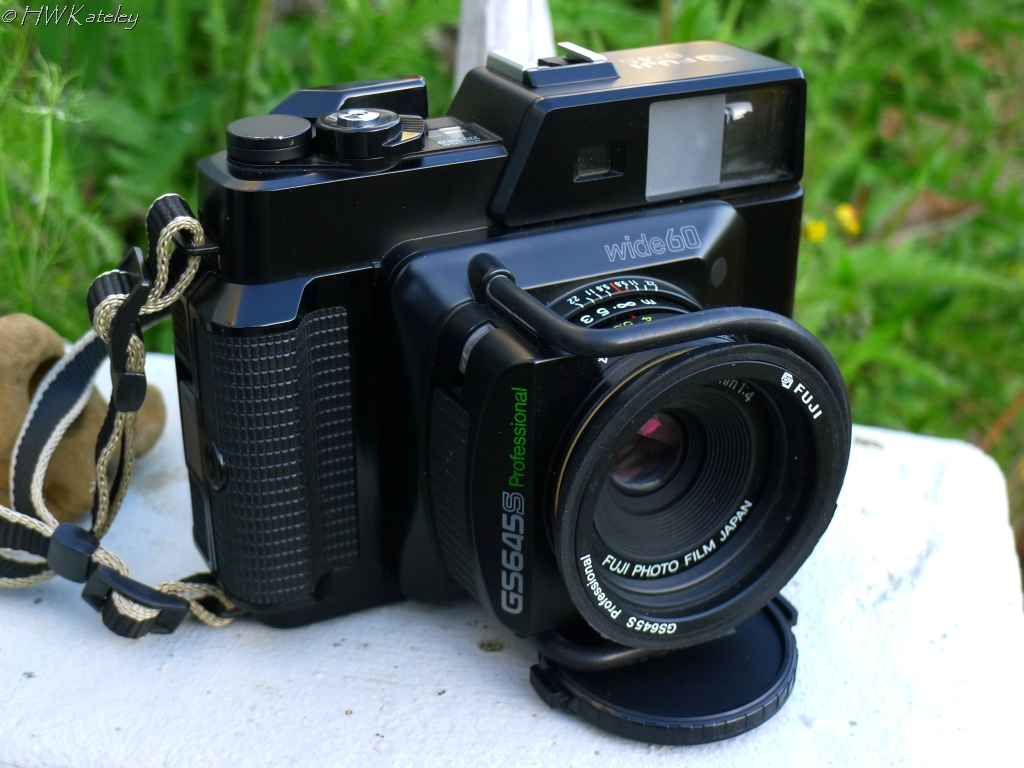
Film Photography - Fuji Medium Format Camera Review

Film Shooters Collective presents a post by HW Kateley reviewing the Fuji GS645S Review | HW Kateley: "HW Kateley reviews the Fuji GS645s"

Friday, September 30, 2016

Film Photography Crash Course

Read another blog post around film photography at photographyconcentrate.com.

Rob Lim compiled a nice article on film photography: Film Photography Crash Course

Rob Lim names main motivators for shooting film to be:

- The look of film
- The process of shooting film
- Helps you learn photography

One interesting reference is to digitaltruth.com with a series of apps for the film photographer who wants to take control over all his development and printing process.

Friday, September 23, 2016

Revival of Vanishing Technologies Through Art

It is no secret that technologies which already disappeared go through serious revival. Not only in photography but also in many handcrafts.

Visit the blog post by Ariela Gittlen on 7 Vanishing Technologies Making a Comeback Through Art.
It is a portrait interesting to read of seven technologies which are going through serious revival in newer times.

  • Film photography
  • Polaroids
  • Screen-Printed Textiles
  • Practical Special Effects
  • Sign Painting
  • Mail Art
  • Cadmium Pigment

Thursday, September 22, 2016

Raising Interest in Analog Photography

A recent survey around analog photography shows interesting conclusions.


More than 50% of analog photographers expose more than 50 films per year.

More than 60% of film photographers are photographers for a long time.
Interestingly, 7% are newbies in photography.

The ambitious analog photographer self develops his films.

When it comes to develop prints on paper still 47% are following the complete analog process.

A majority of analog photographers prefers black and white film.

Sunday, September 18, 2016

The Comeback of Film Photography

It seams that I am not the only one fascinated by film photography.

In a recent post on PetaPixel blog Temoor Iqbal published a post entitled "Film Photography is Making a Stunning Comeback" - see link

One thing which adds technical value to me when shooting film is the fact that developed film persists for ages while digital images just disappear in a digital archive and always need some other technology to remain accessible.
In the blog exactly this aspect is outlined too.

Some statements:


"File types come and go—even the ubiquitous JPEG format may not be readable by standard hardware in 20 or 30 years—so constant, active conversion is required to ensure the survival of an archive."

"Ultimately, this is not to say that everyone should immediately discard their digital cameras and switch to film, but rather that film still has a very real and serious place in the world of photography."

Sunday, September 11, 2016

How to use a light meter

When using old film cameras one can not rely on the technological power of built in light meters such as in contemporary DSLR cameras.

Light metering is something rather sensitive when shooting film.

Alex Burke posted a tutorial on petapixel.com worth reading on how to use handheld light meters in order to evaluate the right exposure for your shot.

Thursday, September 8, 2016

Scenic Places in Black and White - Matterhorn

Zermatt in Switzerland is one of these places in the Swiss Alps that offers endless opportunities to enjoy the scenic mountain panorama.

Recently I spent a weekend on the Riffelalp, the Gornergrat side above Zermatt. From this location there is one of the most spectacular view on the iconic Matterhorn.
Taking the train to the Gornergrat is one thing not to miss. From the Gornergrat Kulm one can experience an exceptional panorama on the Monte Rosa, the Matterhorn and plenty of other 4000 m.a.s.l high peaks of the Swiss alps.

Opportunities for iconic pictures can be found at the Riffelsee. A little lake embedded in-between two mountain rims with usually mirroring clear surface in which the Matterhorn is reflected.

It is possibly one of the most touristic shots. Thousands of international tourists per year in search of typical pictures. Here another representative in black and white taken on a beautiful morning this summer.

Best time to go is in the morning since then the sun illuminates the Matterhorn from the front. A scenic place for landscape photography.