Showing posts with label camera. Show all posts

Sunday, May 21, 2023

As an underwater photographer: What can I do with Nikon Z8 what I am not able to do with a Nikon D800?

As my current photography setup - with a focus on underwater photography - is based on the Nikon D8, I ask myself if the Nikon Z8 should be my step into mirrorless.

The Nikon Z8, as a more recent model, incorporates several advancements over the Nikon D800, offering several features and capabilities that are not available in the older camera. Here are some key differences and advantages of the Nikon Z8 compared to the Nikon D800:

  1. Mirrorless Design: The Nikon Z8 is a mirrorless camera, while the Nikon D800 is a DSLR (Digital Single-Lens Reflex) camera. The mirrorless design eliminates the need for a mechanical mirror and pentaprism, resulting in a more compact and lightweight body for the Z8. This makes it more portable and easier to handle, especially in underwater environments.

  2. Electronic Viewfinder (EVF): The Nikon Z8 features an electronic viewfinder, whereas the Nikon D800 utilizes an optical viewfinder. An EVF provides a real-time preview of the image, displaying exactly what the sensor captures. It offers advantages such as exposure simulation, focus peaking, and the ability to review images directly in the viewfinder, which can be particularly useful for underwater photographers in challenging lighting conditions.

    And, not having to change position in order to review the just shot image on an external display can be essential. Specially, as in underwater photography one moves really close to the subject in order to minimise the density of particles in the water between subject and lens.

  3. Higher Resolution: The Nikon Z8 boasts a higher resolution than the Nikon D800. While the D800 offers an impressive 36.3 megapixels, the Z8 takes it a step further with a 60-megapixel full-frame sensor. This higher resolution allows for capturing more detail and provides flexibility for cropping or printing large-format images.

  4. Enhanced Low-Light Performance: The Nikon Z8 incorporates improved low-light capabilities compared to the Nikon D800. Its larger pixel size, better ISO performance, and advanced noise reduction algorithms enable it to capture cleaner and more detailed images in low-light situations, which is beneficial for underwater photography where light diminishes as you go deeper.

  5. Advanced Autofocus System: The Nikon Z8 features a more advanced autofocus system compared to the Nikon D800. It utilizes Nikon's latest autofocus technology, which includes a higher number of focus points, improved subject tracking, and enhanced speed and accuracy. This allows for more precise and reliable autofocus performance, even in challenging underwater conditions with fast-moving subjects.

    That might be another "killer feature" given subjects in nature photography often move quickly and getting the focus spot right is key for good quality pictures.

  6. 4K Video Recording: While both cameras offer video capabilities, the Nikon Z8 provides 8K video recording, whereas the Nikon D800 is limited to Full HD (1080p) video. The ability to shoot in 8K resolution allows for higher-quality video footage with more detail and flexibility in post-processing.

  7. Connectivity and Features: The Nikon Z8 incorporates modern connectivity options, such as built-in Wi-Fi and Bluetooth, which facilitate wireless image transfer and remote camera control using compatible devices like smartphones or tablets. Additionally, the Z8 offers improved in-camera features like in-body image stabilization, multiple exposure modes, and enhanced creative options, allowing for more creative control over your underwater photography.

It's important to note that while the Nikon Z8 offers these advancements, the Nikon D800 still remains a capable camera with excellent image quality. However, if you are specifically looking for the latest features, improved performance, and the benefits of a mirrorless design, the Nikon Z8 provides a significant upgrade in terms of resolution, low-light capabilities, autofocus performance, and video capabilities, which can enhance your underwater photography experience.

Friday, December 23, 2016

DIY Matchbox Pinhole Camera

Build your own pinhole camera using a matchbox!

Here is a how to build a matchbox pin hole camera in seven steps. link

Try it!

Or this one at lomography.com: link


Or as a how to video:


Some images shot with such pin hole cameras are pretty impressive. Seems worth trying:


Saturday, November 5, 2016

Medium Format Film Cameras

On shootingfilm.net a post by Hkanh Hmoong features a series of famous medium format film cameras.

Only to mention two of the cameras presented on this blog there is the Rolleiflex 2.8F twin lens camera. It is a TLR (twin lens reflex system). A classic for portrait and action photography. The camera has been built in Germany right after world war II in 1949.

The second one to mention is the Mamiya RZ67. This is a medium format single lens reflex camera. The first model has been released in 1982 but the camera was built until later than 2004.


Friday, October 21, 2016

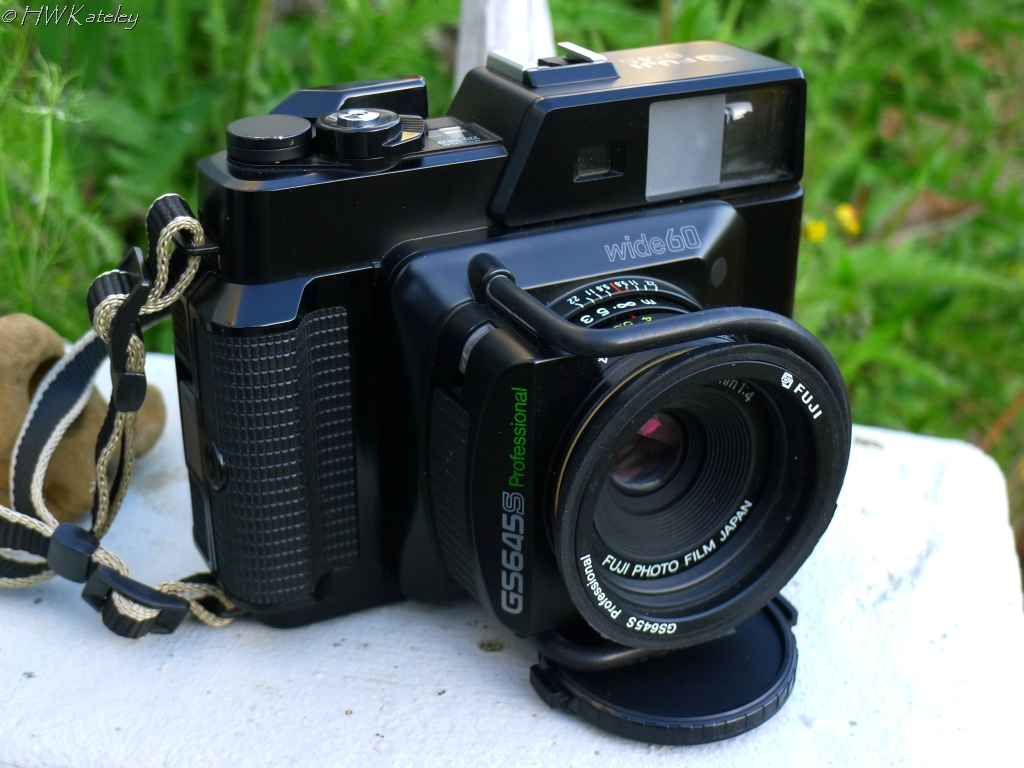
Film Photography - Fuji Medium Format Camera Review

Film Shooters Collective presents a post by HW Kateley reviewing the Fuji GS645S Review | HW Kateley: "HW Kateley reviews the Fuji GS645s"

Saturday, October 1, 2016

Mirror Less Medium Format Cameras

Is 2016 becoming the year of mirror less medium format photography?

After the introduction of the Hasselblad medium format mirror less camera x1d earlier this year Fujifilm introduced their version of a mirror less medium format product line - GFX 50s - at the Photokina show.


Sunday, September 25, 2016

Medium Format Digital Photography

Now, digital medium format is coming.

Fujifilm is the next one to go medium format.

The GFX 50S is the first digital medium format camera by Fujifilm.

Read the following blog post for recent news: link

Friday, September 9, 2016

Film Cameras in a Digital Age


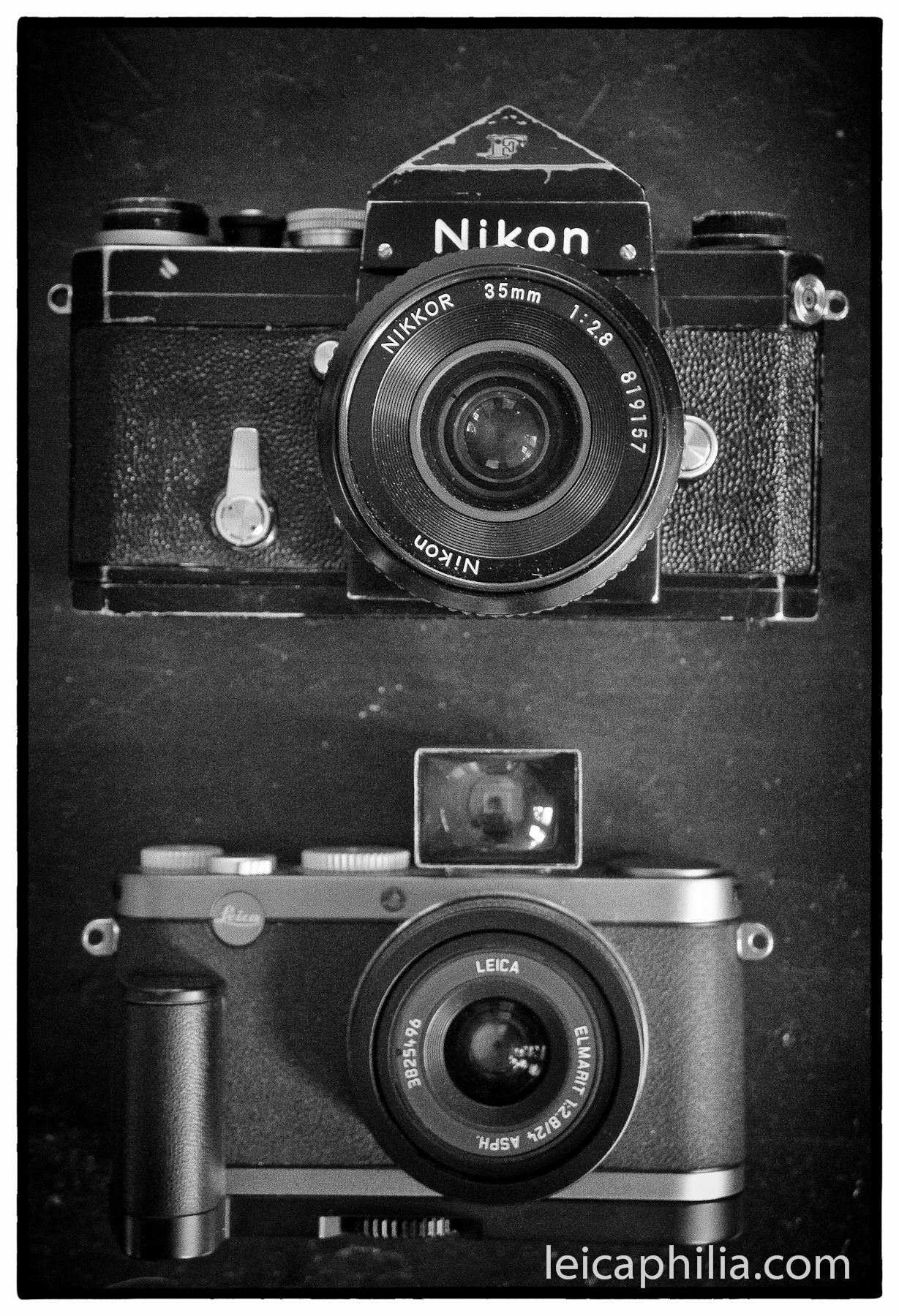
Why a mechanical film camera in a digital age? - A question which keeps me busy since quite some tome. And apparently not only me. - A recent post on leicaphilia.com all deals around this question.
Mechanical cameras have been considered obsolete for some time. The number of digital camera models hitting the market in the last slightly more than 10 years is almost infinite. - Never the less analog cameras undergo a comeback.
Photography shops have old mechanical second hand cameras again in their offering and retired mechanical engineers who still know how to service them start small businesses again do do so.
The post on leicaphilia.com is worth reading for everybody who is interested in this topic.

Friday, September 2, 2016

History of Nikon Cameras

 Nikon has a long history of cameras. Starting in 1948 with the range finder camera Nikon 1 to the most recent flagship camera the digital Nikon D5.

Friday, August 26, 2016

Mechanical Cameras

Mechanical old cameras are in particular interesting since they are truly all mechanical.

Meaning a mechanically skilled person having appropriate tools can - if skilled enough - easily repair them.

Nikon Rumors shows a series of mechanical schematics for old Nikon F cameras: link

If you happen to still have one of these in your cupboard. Why not trying to disassemble and reassemble one?

It is fascinating that an all mechanical solution to aperture agitation synchronisation with shutter speed timing was precisely possible already ages ago.
Similar to the fascination of mechanical wrist watches which are miniaturised master pieces of mechanical engineering.

Monday, August 8, 2016

Black and White - Super 8 Camera Photography

Minolta Super 8 by Daniel Skog on 500px.com
Minolta Super 8 - Daniel Skog (500px)
Super 8 by MARCOS FERREIRA on 500px.com
Super 8 - Marcos Ferreira (500px)
Eye-Matic by Elemental Imaging on 500px.com
Eye-Matic - Elemental Imaging (500px)
Sankyo Film by Rodrigo Miguel on 500px.com
Sankoyo Film - Rodrigo Miguel (500px)
24468023785.jpg by David Leautaud on 500px.com
24468023785.jpg - David Leautaud (500px)


Friday, August 5, 2016

Vintage Celebrity Portraits

Recently I discovered an interesting series of vintage photographs on vintage everyday.
The post was entitled "30 Amazing and Interesting Portraits of Celebrities with Their Vintage Cameras".

Now, the title is a bit misleading since at the tame of respective image capture these cameras were nothing but vintage. It is rather a series of vintage portraits and self portraits of celebrities with cameras.

There is no major celebrity missing in this photo stream. And it shows that now and then celebrities were taking pictures for their memories just as the everyday person. This even with the same type of cameras.

Ok, the Queen of the UK was using quite an expensive Leica camera, but at the time this was a frequently used device.

The same camera Brad Pit was using for his self portrait.

While almost all celebrities in the series are shooting handheld range finder or SLR cameras, Angelina Jolie is working - or at least posing - with a decent large format camera.
I am wondering what picture came out of that shot?


Friday, July 29, 2016

Motion Picture - Super 8 Camera

I am all set to expose my first roll of Super 8 using my grand fathers more than 40 years old camera. It is exciting to get back to old technology.

So far I could not find a decent manual for the camera I have.

Using old gear sometimes needs some explanation.
Here a "How to use a Super 8 Camera"

Thursday, July 14, 2016

High End Cameras - Alpa Phase One

Have a look at this humanistic report by Kai W. on the high end Alpa Phase One camera. - Testing out the gear lead to several spectacular failures...


And a second report using the medium format Phase One for high end large scale photos:

Sunday, June 26, 2016

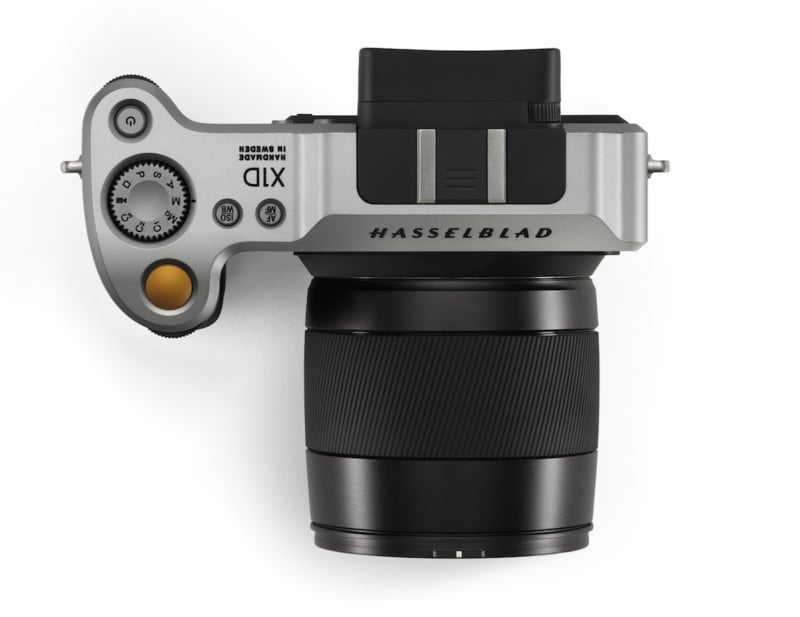
Hasselblad X1D - Mirrorless Digital Medium Format

Camera manufacturer Hasselblad from Sweden just recently launched the Hasselblad X1D.
X1D is the first mirrorless digital medium format camera.

The camera comes with a 50MP CMOS sensor in a housing no larger than a full format DSLR camera.

The sensor has a dimension of 44 x 33m with a single pixel size of 5.3 x 5.3 micro meter.

Together with the camera a new series of lenses has been introduced. This XCD series of lenses are optimised for this mirror less setting. However, current H System lenses fit the camera using an optional adapter.

"Small enough to take anywhere, powerful enough to capture anything."

This invention brings high end glass and sensor technology to a handy form factor which allows the use of digital medium format in many more situations than current solutions.

Wednesday, June 22, 2016

Camera Shopping in Japan


Japan offers a lot of opportunities for camera gear addicts. With respect to price - even given the fact that many camera manufacturers are Japanese - there might be more attractive places on earth, but in terms of selection and variety Japan is one of the most attractive places.