Showing posts with label underwater photographer. Show all posts

Saturday, May 27, 2023

Adobe Lightroom for Underwater Photographers: Capabilities and New Features

Adobe Lightroom has been a preferred choice for photo editing and organization for years. As a software, it blends simplicity with powerful editing tools to transform images in an intuitive and non-destructive way. One specific genre of photographers that greatly benefits from Lightroom's capabilities are underwater photographers. This article aims to shed light on how Adobe Lightroom supports the creative endeavors of underwater photographers and the newest features that make it a strong tool.

Adobe Lightroom for Underwater Photographers

Underwater photography is a unique discipline that has its own set of challenges, especially when it comes to post-processing. Adobe Lightroom offers several tools and capabilities specifically suited to addressing these challenges.

White Balance and Color Correction

The first significant issue for underwater photographers is the color distortion caused by the water's depth. As you go deeper, the light spectrum changes and images tend to skew toward the blue or green end of the spectrum. Adobe Lightroom comes with advanced color correction capabilities, allowing photographers to adjust white balance post-capture, bringing back the true colors of the underwater scene.

Noise Reduction

Underwater photographers often need to crank up the ISO to deal with the relatively low-light conditions underwater, which could introduce noise. Lightroom's noise reduction capabilities can help to manage and reduce noise, maintaining the clarity and crispness of the photograph. Specially the new AI based noise reduction algorithm does a pretty good job.

Lens Corrections

Underwater housings and ports can distort images, causing aberrations. Adobe Lightroom has a lens correction feature that can fix this distortion, providing the ability to manually adjust the vertical and horizontal perspective as well as correcting for chromic aberrations.

Detail Enhancement

Often, intricate details of the underwater life may get lost due to limited light and water clarity. Lightroom’s clarity, texture, and dehaze sliders can enhance these details, making the image more vibrant and revealing the hidden beauty of the underwater world.

Newest Features in Adobe Lightroom (as of 2023)

Adobe continually enhances Lightroom with newer features, making it even more powerful for underwater photographers.

Super Resolution

With the Super Resolution feature, photographers can now upscale their photos without losing details. This feature uses machine learning to increase the resolution of the photo, which could be beneficial for printing large format images or for heavy cropping.

Advanced Color Grading

The color grading tool, an upgrade on the older split toning, allows photographers to apply color tints to the shadows, midtones, and highlights separately. For underwater photographers, this feature can help achieve more creative color grading, helping the underwater life in the image to stand out.

Faster Performance

Adobe has made significant strides in improving Lightroom's performance, resulting in faster import, preview generation, and export times. A smooth and responsive editing experience is invaluable for photographers with large batches of underwater photos.

Improved Masking

The recent updates have introduced a new Masking panel which includes Select Subject and Select Sky. These can be particularly helpful for underwater photographers when editing creatures or specific underwater features. As well as in the process of removing backscatter particles.

Presets and Profiles

While not entirely new, Adobe Lightroom continues to expand its offering of built-in presets and creative profiles, which could provide a good starting point for editing underwater photos, and help in maintaining a consistent style.

To conclude, Adobe Lightroom offers a wealth of features that can help underwater photographers overcome the unique challenges posed by their genre. The continuous updates and added features keep enhancing its capabilities, maintaining Lightroom's position as an indispensable tool in the digital darkroom for underwater photographers.

Sunday, May 21, 2023

As an underwater photographer: What can I do with Nikon Z8 what I am not able to do with a Nikon D800?

As my current photography setup - with a focus on underwater photography - is based on the Nikon D8, I ask myself if the Nikon Z8 should be my step into mirrorless.

The Nikon Z8, as a more recent model, incorporates several advancements over the Nikon D800, offering several features and capabilities that are not available in the older camera. Here are some key differences and advantages of the Nikon Z8 compared to the Nikon D800:

  1. Mirrorless Design: The Nikon Z8 is a mirrorless camera, while the Nikon D800 is a DSLR (Digital Single-Lens Reflex) camera. The mirrorless design eliminates the need for a mechanical mirror and pentaprism, resulting in a more compact and lightweight body for the Z8. This makes it more portable and easier to handle, especially in underwater environments.

  2. Electronic Viewfinder (EVF): The Nikon Z8 features an electronic viewfinder, whereas the Nikon D800 utilizes an optical viewfinder. An EVF provides a real-time preview of the image, displaying exactly what the sensor captures. It offers advantages such as exposure simulation, focus peaking, and the ability to review images directly in the viewfinder, which can be particularly useful for underwater photographers in challenging lighting conditions.

    And, not having to change position in order to review the just shot image on an external display can be essential. Specially, as in underwater photography one moves really close to the subject in order to minimise the density of particles in the water between subject and lens.

  3. Higher Resolution: The Nikon Z8 boasts a higher resolution than the Nikon D800. While the D800 offers an impressive 36.3 megapixels, the Z8 takes it a step further with a 60-megapixel full-frame sensor. This higher resolution allows for capturing more detail and provides flexibility for cropping or printing large-format images.

  4. Enhanced Low-Light Performance: The Nikon Z8 incorporates improved low-light capabilities compared to the Nikon D800. Its larger pixel size, better ISO performance, and advanced noise reduction algorithms enable it to capture cleaner and more detailed images in low-light situations, which is beneficial for underwater photography where light diminishes as you go deeper.

  5. Advanced Autofocus System: The Nikon Z8 features a more advanced autofocus system compared to the Nikon D800. It utilizes Nikon's latest autofocus technology, which includes a higher number of focus points, improved subject tracking, and enhanced speed and accuracy. This allows for more precise and reliable autofocus performance, even in challenging underwater conditions with fast-moving subjects.

    That might be another "killer feature" given subjects in nature photography often move quickly and getting the focus spot right is key for good quality pictures.

  6. 4K Video Recording: While both cameras offer video capabilities, the Nikon Z8 provides 8K video recording, whereas the Nikon D800 is limited to Full HD (1080p) video. The ability to shoot in 8K resolution allows for higher-quality video footage with more detail and flexibility in post-processing.

  7. Connectivity and Features: The Nikon Z8 incorporates modern connectivity options, such as built-in Wi-Fi and Bluetooth, which facilitate wireless image transfer and remote camera control using compatible devices like smartphones or tablets. Additionally, the Z8 offers improved in-camera features like in-body image stabilization, multiple exposure modes, and enhanced creative options, allowing for more creative control over your underwater photography.

It's important to note that while the Nikon Z8 offers these advancements, the Nikon D800 still remains a capable camera with excellent image quality. However, if you are specifically looking for the latest features, improved performance, and the benefits of a mirrorless design, the Nikon Z8 provides a significant upgrade in terms of resolution, low-light capabilities, autofocus performance, and video capabilities, which can enhance your underwater photography experience.

Wednesday, August 3, 2016

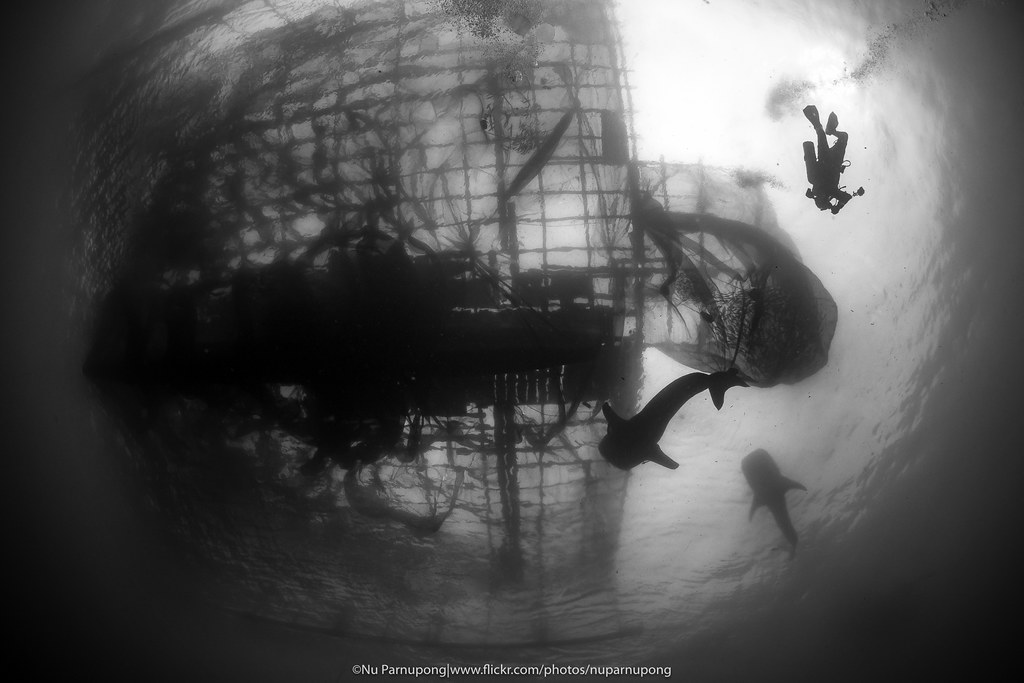
Featured Photographer - Nu Parnupong

I am impressed by the work of underwater photographer Nu Parnupong.
I can recommend having a look at for example his flickr portfolio.

Here Nu is showing amazing images of whale sharks. He is a true master of wide angle underwater photography.
Furthermore there are images from mobula rays feeding on sardines. A spectacle captured in wide angle still images which allow to feel the dynamics of that scenery.

Or more images of humpback whales in sardine run in South Africa.

A true master of underwater photography.

P2160508
Nu Parnupong - Flickr

Wednesday, April 6, 2016

Kim Yusuf - Underwater Photography

Harlequin shrimp portrait
Since quality of compact cameras became more serious and availability of underwater camera housings is given underwater photography almost became a commodity. Looking through picture archives such as Facebook, flickr, 500px, and more the number of published underwater imagery is endless. And many of the images are average.

A couple of years ago I met Kim Yusuf, German underwater photographer on a North Sulawesi trip to Bangka Island and Bunaken marine park.
We were diving together at some exceptional dive spots. And already under water I could see that Kim was up to get the "big picture".

Kim and his wife, always worked closely together to get the big shot. Kim's wife referred to herself as "head of snoot operations".  And you can see the quality of that collaboration in the results.

After that trip I googled for him and found his work on flickr and on his personal web site.

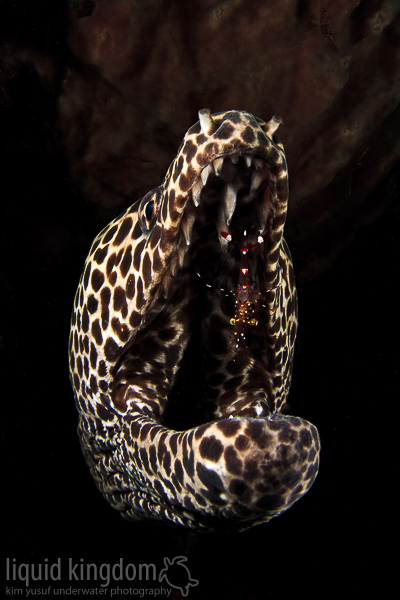
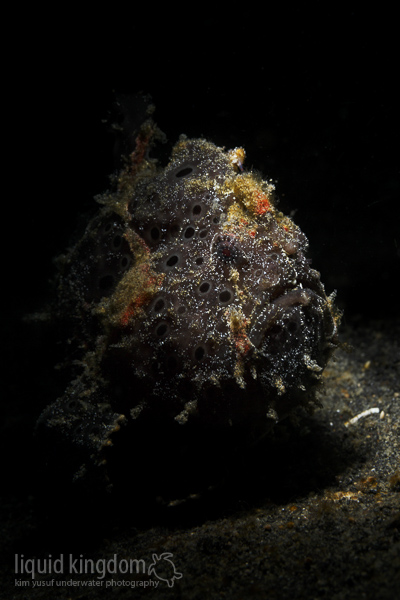
Some of his images truly are cutting edge in underwater photography. Both macro and wide angle images are well composed and exposed. Something many underwater photographs are missing.

I can only recommend to explore Kim's gallery and web site for inspiration.

Kim travelled many places on earth to capture special nature phenomena.

Browsing through Kim's portfolio I am deeply impressed. Especially by his close up images of interactions between marine animals. Myself, diving and taking underwater pictures since many years I even did not really see respective situations underwater.  Some of these images are truly unique.

For the gear aficionados, Kim let's you to explore his portfolio by camera, lens, iso, exact location, ...