Showing posts with label history. Show all posts

Tuesday, January 3, 2023

The Temples of the Angkor Empire

Angkor is a complex of ancient temples in Cambodia, with the most famous being Angkor Wat. The temple city of Angkor, located in present-day Siem Reap Province, was the capital of the Khmer Empire, which ruled much of Southeast Asia from the 9th to the 15th centuries. The empire's power and influence extended over much of modern-day Laos, Thailand, and Vietnam.

Angkor Wat temple
Angkor Wat is the largest and most well-preserved temple in the complex, and is considered a masterpiece of Khmer architecture. It was originally built as a Hindu temple dedicated to the god Vishnu, but later became a Buddhist temple as well. The temple is known for its elaborate carvings and reliefs, as well as its impressive size. The temple is surrounded by a moat and has three enclosing walls, with the outer wall measuring 1.5 km (0.9 miles) in length and the inner wall measuring 1.3 km (0.8 miles) in length.

Ta Prohm temple
Other notable temples in the Angkor complex include Angkor Thom, the Bayon, and Ta Prohm. Angkor Thom was the last capital of the Khmer Empire, and is known for its towering stone gates and massive stone faces carved into the temples. The Bayon is a temple with a distinctive style, featuring giant stone faces carved in all four directions. Ta Prohm is a temple that has been left largely unrestored, and is known for its massive trees growing out of the temple walls and roofs.

Angkor is a UNESCO World Heritage Site and is a popular tourist destination in Cambodia. The temple complex is open to visitors every day from sunrise to sunset, and there are guided tours available for those who wish to learn more about the history and architecture of the temples.

In addition to the temples of Angkor, there are many other temples and historical sites to see in Cambodia. Some other notable temple complexes outside of Angkor include:

  1. Banteay Srei: Located in the province of Siem Reap, Banteay Srei is a small temple complex known for its intricate carvings and pink sandstone walls.

  2. Preah Vihear: This temple is located in the Dângrêk Mountains on the border between Cambodia and Thailand, and is known for its dramatic location atop a cliff. It is a UNESCO World Heritage Site.

  3. Phnom Chisor: Located in the province of Takeo, Phnom Chisor is a temple complex built on a hilltop and surrounded by a moat. The temple dates back to the 11th century and offers panoramic views of the surrounding area.

  4. Koh Ker: Located in the province of Preah Vihear, Koh Ker is a temple complex that was the capital of the Khmer Empire for a brief period in the 10th century. The site is known for its large pyramid temple, as well as its many lingas (phallic symbols) and yonis (symbols of the female genitalia).

  5. Sambor Prei Kuk: Located in the province of Kampong Thom, Sambor Prei Kuk is a temple complex dating back to the 7th century. The site is known for its sandstone temples and its many inscriptions, which provide insight into the history and culture of the period.

Banteay Srei temple
These are just a few of the many temples and historical sites to see in Cambodia. The country has a rich and varied history, and there are many opportunities for visitors to learn about and explore its cultural and architectural treasures.

Friday, September 2, 2016

History of Nikon Cameras

 Nikon has a long history of cameras. Starting in 1948 with the range finder camera Nikon 1 to the most recent flagship camera the digital Nikon D5.

Thursday, August 18, 2016

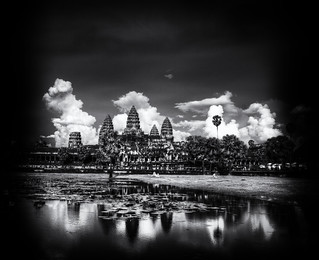
Scenic Places in Black and White - Angkor Wat

The Old Temple of Lore
The Old Temple of Lore - Tray Ratcliff (flickr)
Angkor Wat in Cambodia is probably one of the most scenic historical places around the world.

This is a first post in a series entitled "Scenic Places in Black and White".
Photographing scenic places around the world is one of the most rewarding disciplines in photography. Capturing them in black and white is something special.
Black and white photography gives a whole new view on details, on contrast, on light, and on scenery.

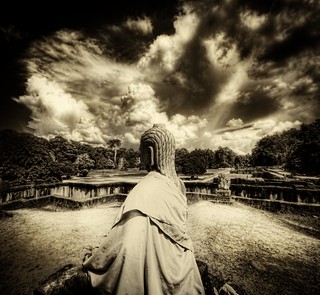
Meditation
Meditation - Tray Ratcliff (flickr)
A place like Angkor Wat - I never visited so far by myself - is not only a magical place by itself but offers plenty of details which come out especially when taken in black and white.

Here as a reference two images by famous travel photographer Tray Ratcliff. Both images have been taken using a digital SLR camera and have been converted to black and white in post processing.

Both images show the spiritual and timeless atmosphere of this place. The monochromatic color profile results in a characteristics of the photograph which cancels the dimension of time. It could have been taken ages ago or just right in this moment.
The temples of Angkor are historical landmarks witnessing a culture from another time. The black and white photography very well captures this aspect by only offering one dimension in color space which is showing all in shades of grey.
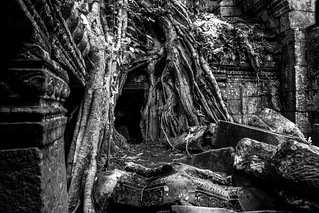
Cambodge - Angkor
Cambodge - Angkor - Stephan Birlouez (flickr)
It is not only the architecture, the contemporary witness of previous handcraft, but also nature, the whole vegetation that visualises or plasticises the timely dimension in these images.
As an example the image taken by Stephan Birlouez which shows roots of trees taking control over the man made walls and stones.

What is interesting is the fact, that even in today's digital world on image sharing platforms in the internet such as flickr there is a large series of images from this scenic place taken (or presented) in black and white. This clearly shows the value of monochromic imaging for these kind of subjects.

Wednesday, August 17, 2016

Top 10 Most Influential Photographers


Top 10 Photographers: Top 10 photographers who influenced photography as it is today, categorized by category.

Friday, July 22, 2016

Rescued Film Project

The rescued film project is dedicated to rescuing lost and forgotten rolls of film from all over the world. Levi Bettwieser is running that project dedicated to rescuing and archiving these historical images which otherwise would be lost or destroyed.

Among the rescued rolls there is a series of images taken by a world war two soldier which had never been developed. Watch the video below. This is an impressive documentary by Levi Bettwieser about his passion and the series of rolls shot by this soldier 70 years ago that are developed and watched at for the first time.


Once again I learn that images on film have an incredibly long life. Film is probably one of the most persistent storage media for any kind of data. I often ask my self whether my digital image archive will still be available, usable, and searchable in 15 years time given technological development. However, the film negatives from my early days of photography as a child more than 25 years ago are still physically there, I can scan them, process the scans and use them like any digital image today. Same for the pile of slides from my father and grandfather that will never expire.

Levi Bettweiser develops the film in small series by hand at home in his kitchen. He says that developing film which has been stored somewhere most likely under non ideal conditions is a case buy case hand craft. For this kind of film a commercial lab processing hundreds of films per day would just not get the results needed for these historical testimonials.


In order to rescue more film, Levi Bettwieser is running a crowdfunding campaign in order to raise money for development of another stock of 66 bundles of film which is approximately 1200 rolls.