Visit my analog photography gallery for an update with some more winter and landscape pictures on Ilford film.

Saturday, May 30, 2015

Saturday, April 11, 2015
Analog film photography - the process
The analog photography process. This video gives a short insight into the handcraft of developing film.
Monday, April 6, 2015
One Roll of Film project
A very interesting project, four Tokyo-based photographers taking the challenge of shooting one roll of 120 film on a old Hasselblad analog camera.
A fantastic idea, documenting the process of taking exceptional pictures. Compared to digital the photographers start to think much more about composition of the image, about the light, about the camera setting, they develop patience, they develop a vision of what they are going to shoot first.
Learning about this project on YouTube and watching the documentary, I became much more aware of what it means to take exceptional pictures, about how to deal with all the details in the process.
It's about really developing the handcraft of the art of photography.
Have a look at the documentary:
Links to respective photographers website:
Mattias Westfalk
Richard Atrero de Guzman, Bahag
Yoshiki Suzuki
Paul del Rosario
A fantastic idea, documenting the process of taking exceptional pictures. Compared to digital the photographers start to think much more about composition of the image, about the light, about the camera setting, they develop patience, they develop a vision of what they are going to shoot first.
Learning about this project on YouTube and watching the documentary, I became much more aware of what it means to take exceptional pictures, about how to deal with all the details in the process.
It's about really developing the handcraft of the art of photography.
Have a look at the documentary:
Links to respective photographers website:
Mattias Westfalk
Richard Atrero de Guzman, Bahag
Yoshiki Suzuki
Paul del Rosario
Sunday, March 22, 2015
Analog photography project: #myhasselbladproject
In September 2014 I started my analog photography project by ordering a second hand Hasselblad 500 c/m camera from ebay. Not only selecting and ordering the right camera was a challenge, but also finding suppliers for the right film. A next hurdle was finding reliable laboratories which could develop and scan the films.
Follow the photo stream of my analog photography project on Facebook at #myhasselbladproject.
1st step: Getting some black and whit as well as some color film.

2nd step: the camera arrived. Everything fully functional. For a camera built in 1976 it is really in good shape.

3rd step: While there are plenty of smartphone apps for light metering, my analog photography project should involve the use of an analog light meter.

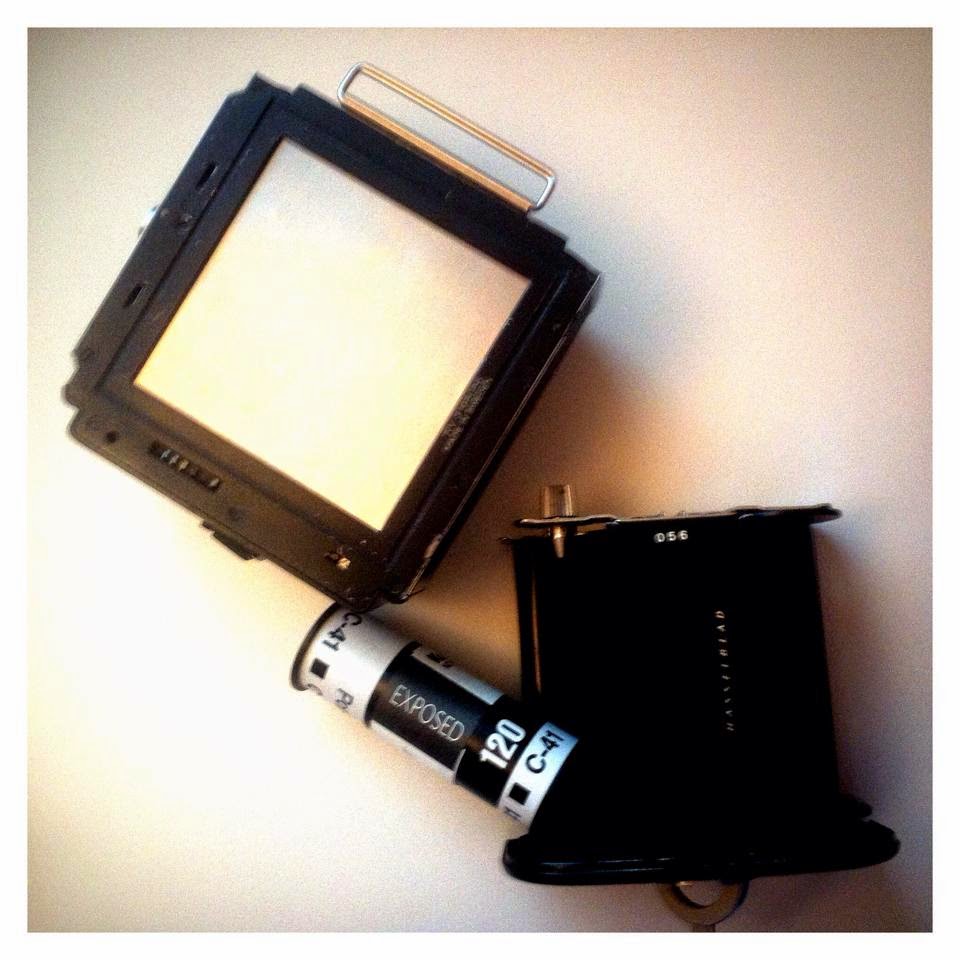
4th step: loading the film to the Hasselblad A12 camera back. Not as easy as loading a flash card!
Youtube is a great source of instruction videos, even for a technology of the pre-internet area.
5th step: getting some pictures at my brothers wedding and getting the first film developed.
Here, one film - 12 images - on an index sheet:

And some serious high resolution scans:
More steps to follow applying another classic color film!
Follow the photo stream of my analog photography project on Facebook at #myhasselbladproject.
Follow the photo stream of my analog photography project on Facebook at #myhasselbladproject.
The first five steps of the project journey
0th step: buying a Hasselblad 500 c/m. I found mine on eBay and hoped it would arrive in as good condition as the seller claimed.1st step: Getting some black and whit as well as some color film.
2nd step: the camera arrived. Everything fully functional. For a camera built in 1976 it is really in good shape.
3rd step: While there are plenty of smartphone apps for light metering, my analog photography project should involve the use of an analog light meter.
4th step: loading the film to the Hasselblad A12 camera back. Not as easy as loading a flash card!
Youtube is a great source of instruction videos, even for a technology of the pre-internet area.
5th step: getting some pictures at my brothers wedding and getting the first film developed.
Here, one film - 12 images - on an index sheet:
And some serious high resolution scans:
More steps to follow applying another classic color film!
Post by Andreas Müller.
Follow the photo stream of my analog photography project on Facebook at #myhasselbladproject.
Saturday, March 21, 2015
The Swiss Alps
One of the last winter days in the Swiss Jura. Remaining snow and a beautiful view towards the Swiss Alps.
View from Waldweid in direction of the Gotthard massif.

Wintertime - Mount Rigi, Switzerland
Selected images from a photo excursion to Mount Rigi in Switzerland.
Mount Rigi offers a scenic 360° panorama of the Swiss alps, the lake Lucerne and central Switzerland. However, on this day the lake and midlands were covered by an endless ocean of fog. Only the tips of the mountains were facing the sunny weather and the blue sky.
Rigi wintertime - Images by Andreas Mueller
Mount Rigi offers a scenic 360° panorama of the Swiss alps, the lake Lucerne and central Switzerland. However, on this day the lake and midlands were covered by an endless ocean of fog. Only the tips of the mountains were facing the sunny weather and the blue sky.
Rigi wintertime - Images by Andreas Mueller
Monday, October 27, 2014
Shanghai - City Life - Captured using the Sony RX100 Mark III
Here a selection of my pictures from Shanghai. All images taken with the Sony RX100 Mark III.
Shanghai - Images by Andreas Mueller
Shanghai - Images by Andreas Mueller
Subscribe to:
Posts (Atom)