On one of my recent flights when approaching Zurich airport I took a series of pictures using my iPhone 6s with the Camera+ App.
It was a beautiful spring evening at 6.30 p.m. Just at the season of the year when trees and fields become green again. The first yellow rape fields are in full bloom. And, cherry and apple trees - white spots in the greenish landscape - are for a short period flourishing.
Shooting from a regular airline plane is always tricky and needs a bit of luck in order to get good shots. Usually the windows are quite dirty and do not allow to get high quality shots.
This time the cloud coverage was just right to give interesting texture of sunlit and shadowed areas in the landscape underneath.
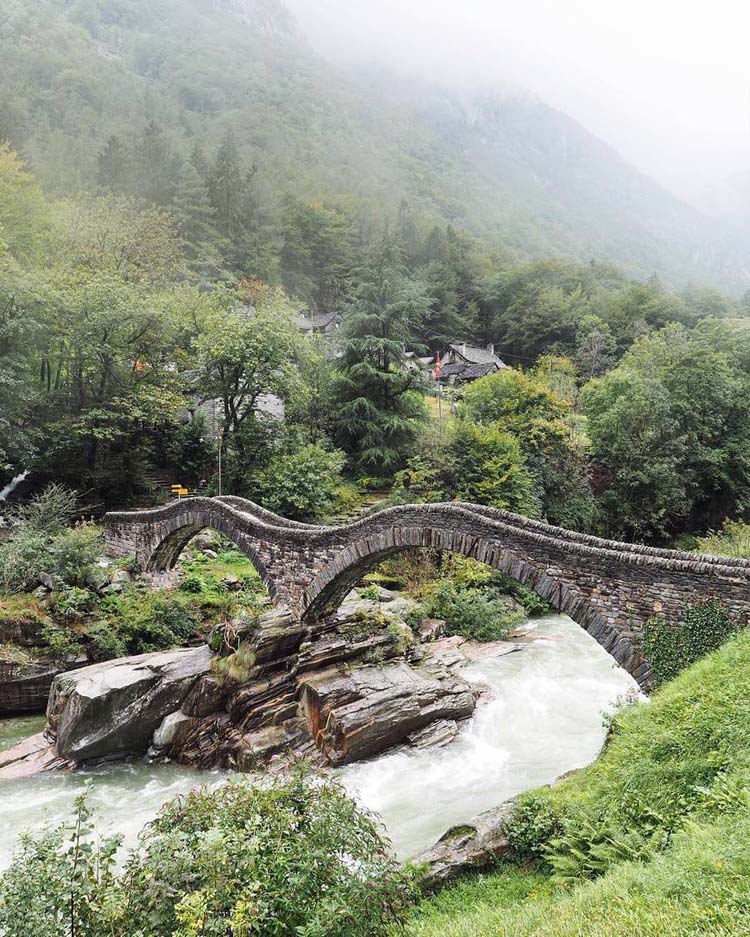
The Valle Verzasca is a long and very scenic valley in southern Switzerland. The Verzasca river - an alpine river - offers a couple of very spectacular opportunities for scuba diving. One of them is the roman bridge at Lavertezzo. - Get an impression by watching the video from Florian Fischer.
Given by the diverse topography of the Swiss landscape, Switzerland offers endless possibilities for landscape photographers. All in close distance there are possibilities of shooting mountain landscapes, agricultural flat plains, cities, lakes, rivers, ...
A few examples can be found in the blog post by Martin Bisaz at downgrade.com.
From my recent trip to Zermatt area in Switzerland I brought back a series of exposed medium format films of the Matterhorn. For these black and white images I was using a Lomography Earl Gray 100 black and white film.
It was an experiment. I was using Ilford and Kodak film for black and white before. But this film, I could recommend using it. I certainly will.
Matterhorn (4478 m.a.s.l): here some documentary photos from my recent photography trip (see post from Saturday January 17th) to Gornergrat Kulm in Zermatt.
I took not only my DSLR equipment with me but also my 1976 Hasselblad 500 c/m with different film. The film is still waiting to be developed.
It was a day with beautiful weather, bright sunlight, blue sky, but still some clouds to make the sky more interesting.
Temperature was -17 °C and the wind made it feel even colder. These conditions made manipulating the cameras and taking pictures not easier.
Technically cameras all worked very well under these conditions. For the analog work I had a bit of problems with my vintage Yashica exposure meter where the exposure needle reacted a bit sluggish and I was not very sure about correct readings.
The bright light reflected from the snow, or direct sunlight made exposure metering very difficult. But I hope to have picked the right settings for good results. Once the films are developed we will know more.
For digital especially changing lenses was difficult. There were always little snow crystals in the air which would absorb on the mirror and lenses and on the inside of the camera body. In consequence some of my digital images got quite a bit of dust - or snow - spots which needed to be retouched.
I experienced similar issues when travelling in very dry areas with dust. However, it was easier to handle these.
The Matterhorn is one of the most iconic mountain peaks of the Swiss Alps. It is probably also the mountain in the Swiss Alps where you could find most photographs taken of.
Next weekend I am going to visit Zermatt and the Gornergrat. I hope to get some decent shots of the Matterhorn and its surroundings. - Hopefully the weather is in favour.
My usual search for "Matterhorn" on 500px.com yields a huge number of very impressive images.
Selected images from a photo excursion to Mount Rigi in Switzerland.
Mount Rigi offers a scenic 360° panorama of the Swiss alps, the lake Lucerne and central Switzerland. However, on this day the lake and midlands were covered by an endless ocean of fog. Only the tips of the mountains were facing the sunny weather and the blue sky.