Showing posts with label nature photography. Show all posts

Sunday, March 26, 2023

Mosaic Tiles Wall-Art

Mosaic wall art is a creative way of home interior decoration.

Here a series of underwater images have been used to creatively decorate a staircase and a bathroom with stunning underwater photography.

It is setting an accent in rooms which are not necesseraly to the most obvious and popular spaces for fine art photography prints in your home.

Unique and Personalized: Mosaic wall art photography allows you to create a unique and personalized piece of art for your home. You can choose from a range of images to create and compose a piece that reflects your personal style and tastes.

Versatility: Mosaic wall art photography can be created in a wide range of styles, colors, and sizes, making it a versatile option for any home decor. As shown here the blueish underwater scenery selection to match style and ambience of certain rooms, or the greenish Costa Rica nature scenery as shown below to create a jungle feeling, or the black and white archeological sceneries from the Angkor temples in Cambodia. A choice for every home.

Textured and 3D: Mosaic wall art photography is created using tiles of photographs. This givs the piece a three-dimensional look and feel. This can add depth and dimension to your home decor, making it more interesting and visually appealing.


Timeless: Mosaic wall art photography is a timeless art form that has been used for centuries. By incorporating this style into your home decor, you can create a piece that will stand the test of time and continue to be a beautiful and creative addition to your home for years to come.

Overall, mosaic wall art photography can be a beautiful and creative way to decorate your home, adding a unique and personalized touch to your space while also creating a timeless piece of art.


Sunday, January 22, 2023

Pygmy In Love

Once upon a time, in the vibrant waters of the Indo-Pacific Ocean, there lived two young pygmy seahorses, named Sirena and Marlin. They lived in the heart of a beautiful red gorgonia coral, swaying with the gentle currents of the ocean.

Sirena and Marlin had known each other since they were just babies and as they grew older, they found themselves drawn to each other. They would spend their days swimming and exploring the coral reef together, and their nights cuddled up in the safety of the red gorgonia.

But their love was not meant to be easy, for there was a fierce storm brewing in the ocean. The powerful currents threatened to tear apart their home and separate them forever. But Sirena and Marlin refused to let their love be destroyed. They fought against the storm with all their might, using their tiny fins to guide their home to safety.

Through their determination and love, they were able to save the red gorgonia coral home and their love was stronger than ever.

As a symbol of their love and devotion, they changed their colors to match the vibrant red of the gorgonia coral, becoming known as the "red seahorses of love" among the sea creatures. They lived happily in the coral reef for many years, and their love story became a legend among the ocean dwellers.

One day, a group of divers stumbled upon their home and were awestruck by the sight of the two seahorses, their matching red colors and the tale of their love and bravery. They shared the story with the world, and Sirena and Marlin's love became an inspiration to all.

Sirena and Marlin's love for each other was as enduring as the ocean itself, and their story would be told for generations to come.

The end.

Get the fine art print of Sirena and Marlin's love for your wall with a special discount (discount code: PYGMY) applied at checkout.

Sunday, January 10, 2021

Iconic Mountains - The Matterhorn

The first work week of the year 2021 has passed. And the current COVID pandemic is controlling many aspects of our lives around the globe.

While searching for an iconic image of the Matterhorn - Mount Cervin in Zermatt - for a wall picture of a friend of mine I was working on my Matterhorn collection.

Some years ago I spent time in Zermatt on several occasions taking pictures of that iconic mountain. We were setting up at the top. Taking pictures both digital as well as on film using my forty years old Hasselblad 500 c/m camera. - An Iconic mountain requires it's picture taken by an iconic camera ;-)

Gornergrat at an altitude of more than 3'100 m.a.s.l. is one of the best spots to take pictures of that impressive mountain rim. 

At this altitude the air starts getting thin and breathing gets challenging with physical efforts. The comfort of being brought up there by cable car in some thirty minutes does not really help in this.

Surrounded by several peaks all higher than 4'000 m.a.s.l. one can feel the power of nature and spirit of earth.

But there is one peak which could not be more prominent. - The Matterhorn - Mount Cervin. That iconic triangular shape towering above all other peaks leaves a massive impression.

There is no doubt that this natural landmark is the biggest asset of the area. Be it for millions of tourists, for pictures, and for all the mountaineers who conquered that mountain.

Unfortunately with the restrictions of the current pandemic tourism is a bit lower and does not pay off that well. Hence, images might be an alternative to serve the longing for mountains.

Probably billions of pictures of that magical mountain have been taken over the years. And many people have a picture a picture decorating the wall in their house or appartement. And nature with ever new weather conditions makes every picture special.

Hence, it can well be understood that the search for new images never ends. And, that iconic pictures of Matterhorn remain attractive to the audience.

Thomas Crauwels - Fine Alpine Photography
While searching the internet for Matterhorn imagery I came across an incredibly impressive portfolio of iconic mountain images by Thomas Crauwels.

Thomas offers his images printed and framed, ready to be placed on a wall as a masterpiece.

And it's not only the Matterhorn which he captured in unprecedented and spectacular manner. He is documenting mountain sceneries of the entire Swiss alps.

I can only recommend to have a look at this exceptional portfolio.

Find the portfolio at link.


Thursday, November 24, 2016

Wildlife Photography: Japanese Snow Monkeys

The snow monkeys from Joshin'etsukogen National Park in Japan are famous.

Famous for taking a bath in the hot springs while outside it is snowing. This should be a target for every ambitious nature and wildlife photographer.

Here a National Geographic documentary: link

Wednesday, October 26, 2016

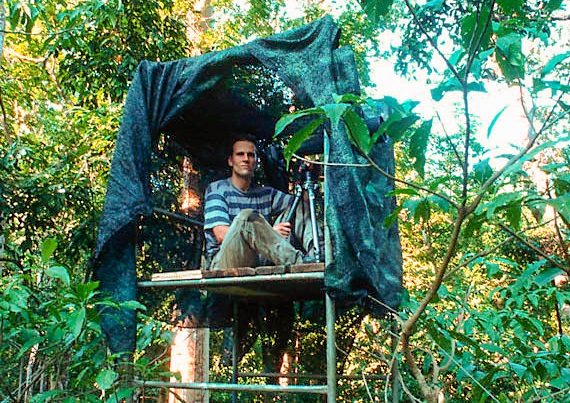
Influential Photographers - Thomas Marent

Thomas Marent from Switzerland is a nature photographer specialised on tropical rain forests.

His photographic career started at age 16 when he took his first SLR camera out to the local Flachsee in central Switzerland to shoot his first nature images in local wetlands.

In 2006 he released his first book with an international editor which allowed him for the first time to make a living out of photography.

On his website - http://www.thomasmarent.com - he features a series of amazing nature photographs. His portfolio is endless with a very strong focus to image composition and detail.

The job of the nature photographer is heavily driven by the ability of being patient. To get the one perfect shot in nature and wildlife it can take days and weeks of patients, adaptation to the environment, and building the right setup.

To be close to animals can be dangerous, but also extremely rewarding in terms of images and experience.

To get these impressive close shots, such as the gorilla drinking in the river (see below) one needs a whole lot of experience. Experience, not only as a photographer but mainly as somebody who understands nature and wildlife and who can read the behaviour and reaction of wild animals.
Get some stunning poster prints at: all posters.ch

Friday, October 7, 2016

Photography Tutorial: How To Get Better Shark Photos Underwater | Scuba Diving

There is still some time to go until my big Cocos Island scuba diving adventure starts. In preparation I am reading a lot on taking pictures of big fish.
While diving the last couple of years the reefs of the coral triangle in South East Asia I was mainly facing macro wildlife and beautiful coral seascape.

Here another photo tutorial worth reading:
Photography Tutorial: How To Get Better Shark Photos Underwater | Scuba Diving

Wednesday, September 21, 2016

Influential Photographers - Paul Nicklen

Paul Nicklen, 1968 born Canadian nature photographer is working since 1995 as a full-time photojournalist.

He is famous for images from the arctic and the antarctic.

Photographing the polar regions is a serious challenge.
Paul takes images on land as well as underwater. On his website he shares some pictures showing how he deals with climatic challenges.

Paul was won the 2012 Veolia Environment wildlife photographer of the year among other awards.

NAS1-HL copy
Please visit Paul's website for a more closer look at his portfolio.

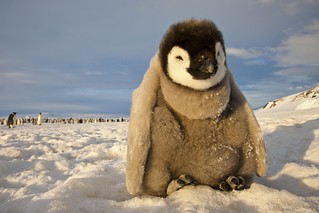
Some images are never seen close ups and portraits of wildlife.

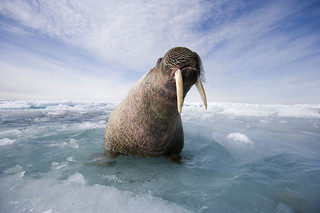
Such as the little baby penguin on the right, or the sea elephant on the bottom of the page.


Walrus, Tangle Island © Paul Nicklen / National Geographic Stock / WWF-Canada

Sunday, April 17, 2016

Saturday Morning at the Zoo

Saturday morning at the Zoo. - When wildlife
awakens.

Some weeks ago I went to the Basel Zoo together with some of my photography friends. An opportunity to use once more the big glass sitting most of the time in the storage at home.

Erdmännchen by Andreas Müller on 500px.com


My setup for the day was the following:

Camera: Nikon D4
Glass: Nikkor 300mm f2.8 VR II together with teleconverter TC-20E III
Support: Manfrotto

For results visit my 500px profile.
Cheetah by Andreas Müller on 500px.com


Main difficulties taking photographs at the zoo using long focal length setups are caused by finding the right perspective across the fence and finding the right background.
Most of the time, even tough not in focal plane, the very geometrical structure of the fence causes blurred areas in pictures to end up with certain unwanted structure.
Same applies to background. In a zoo the farfield background often is something one would not expect the main subject - exotic animals - to sit in.

More images of my friend Joe Lackner using Nikon D800 with the Nikkor 200 - 500 mm lens can be found at http://joephoto.jimdo.com/tiere/zoo-basel/


Monday, April 11, 2016

Black and White - Mount Kilimanjaro Photography

Kilimanjaro by Andreas vdH on 500px.com
Kilimanjaro - Andreas vdH (500px)
Masai herdsman by Craig Korszen-Bennett on 500px.com
Masai herdsman - Craig Korszen-Bennett (500px)
Kilimanjaro Cloud Sea by Jeffrey Zabinski on 500px.com
Kilimanjaro Cloud Sea - Jeffrey Zabinski (500px)
Elephant Procession and Mount Kilimanjaro by Andy Biggs on 500px.com
Elephant Procession and Mount Kilimanjaro - Andy Biggs (500px)
Kilimanjaro - Tanzania by Andrew Cassels on 500px.com
Kilimanjaro - Tanzania - Andrew Cassels (500px)


Friday, April 8, 2016

Special moments in landscape photography

Through the cairn by Hilde Sørdal on 500px.com
Through the cairn - Hilde Sordal (500px)

Landscape photography is one of the oldest disciplines of photography. It has an artistic but also a documentary touch. On one hand landscape photography is about capturing the moment of a wide landscape combining uniqueness of landscape and topography with light and weather conditions, and capturing this unique moment at the right exposure.

Uniqueness can be added by searching for special perspective, special elements, or special landmarks in order to add another dimension to the landscape image.

An example is the image on the left by Hilde Sordal. The stone sculpture in the foreground adds some living, man built, element to the landscape scenery. This still being a static situation, captured at the right moment under sunset conditions is nothing special yet. But getting the last rays of the sun for that particular day shining directly through an almost invisible pinhole across that stone sculpture adds some dynamics and uniqueness of that very moment to the image.

To capture such an exceptional landscape image it not only needs the eye for the landscape, but also the understanding for the uniqueness of a very short moment which will not happen again for quite some time if not captured in this very fraction of a second.

Monday, April 4, 2016

Black and White - Spring Photography

spring by Anton Opanasiuk on 500px.com
spring - Anton Opanasiuk (500px)
Spring crocus by Teuni Stevense on 500px.com
Spring crocus - Teuni Stevense (500px)
Furry Flower by Davey Bessette on 500px.com
Furry Flower - Davey Bessette (500px)
through the wall by Оleg Еrmakov on 500px.com
Through the Wall - Oleg Ermakov (500px)
... by Rauno Kalda on 500px.com
... - Rauno Kalda (500px)


Sunday, April 3, 2016

Microscopic Photography

Nature is all around us. - However, in nature photography we focus mostly on what can be seen by human eye. If we want to go for exceptional nature pictures we might mount a macro lens or a diopter onto our camera. Very rarely we go beyond the optical resolution power of the human eye.

Michael Peres posted an article on the Popular Photography Blog on Microscopic Photography.

The article features examples of stunning microscopic images of snow flakes, microscopic organisms, material surfaces, and scientifically prepared samples of nature samples.

Microscopic photography is truly a special and a niche discipline of nature photography. It goes much beyond macro and super macro imaging techniques. It is a whole new world by means of imaging, exposure, image composition, and light guidance.

It is definitely not only a special imaging but also a sample preparation and lighting technique.

Feel encouraged to have a look at the original post:

Tips From a Pro: An Introduction to Microscopic Photography | Popular Photography

Thursday, February 25, 2016

Creative Nature Photography

Nature photography can be purely documentary, or it can be a form of innovative creativity and art.

In this post I compiled some background on an example of very creative nature photography. Be it by means of composition, capture, or exposure.

Ice Study by Henry Liu on 500px.com

The left hand image shows a researcher on a frozen lake at night. It is a master piece in image composition and exposure.

Title: Ice Study

Photographer: Henry Liu
Source: 500px

Comment by photographer: A self-portrait of me studying ice on frozen Georgian Bay, Lake Huron, about one hour after sunset.

Image details by photographer:
Nikon D800E, 13-24mm f2.8 (at 14mm, f2.8, 30s, ISO 100)
Focus stacking for full depth sharpness (6 shots at f2.8)


Both, the sky covered with starlight and the bright light from the flash light falling through the clear ice ad a third dimension and depth to the image. Scratches in the ice, producing diffuse white light from the flash light, add texture and some line and guidance for the viewer towards the person holding the flash light.

The image exhibits a very wide dynamic range from true white - the ice illuminated by the flash light -  towards true black - the mountains at the horizon.
The color spectrum is immense with strong whites, strong blacks, the greenish color of lake topography shimmering through the ice, the dark blue of the night sky, and everything in between covering lila, purple, red, ...

With all these photographic elements covered. This image is a nature photography which not only documents the sunset and upcoming starlight over frozen Lake Huron. The photographer added artistic elements and creative dimensions to the image by illuminating parts of the ice surface and the lake underneath with his flash light.

Sunday, November 1, 2015

The concept of raw perfection

Yesterday I heard an impressive talk by nature photographer Gregory Basco at the Digital Event in Baden, Switzerland. In his presentation Gregory showed a couple of very impressive and artistic images from the diverse nature of Costa Rica including explanations on how the pictures were captured.

Part of the talk covered Gregory's philosophy around the concept of "raw perfection" (refer to the linked blog post). The approach is around striving for perfection in raw files (no cropping, no cloning, no major post processing) and disclosing and sharing everything which has been done to a photograph.
The approach is around getting the exposure for the entire photograph as well as its composition right directly in camera using a variety of filters, setups of flash, and all kinds of other little tricks.

Some of the examples Gregory presented were astonishing.

One of his compositions involved a short flash exposure of an object in the foreground combined with a longtime exposure of the night sky as background. In order to get both parts of the scene perfectly in focus the focus was readjusted manually during the longtime exposure after the flash for the foreground had fired to the background scenery for sharp exposure of the background sky.

Another one involved the application of a very old technique from analog days called dodging. A beautiful landscape image of a rain forest scenery exhibiting that strong contrast that a perfect exposure within one shot would not have been possible. The foreground of the scenery, the bottom to left part, showed a beautiful greenish forest scenery while the top right part was a forest glade with sun shining in. Hence, the top right would have been heavily over exposed. The "raw perfection" solution was to choose a long exposure, to get the bottom left foreground right, and using a black card to block for some time of the exposure manually the light falling on the top left area of the image. The result is almost a one shot in camera HDR image perfectly exposed in all areas showing the depth and range in the forest scenery.

Many more examples were given. Some of them with creative and elaborate flash and trigger trap setups.

While not that sophisticated I noticed that I am applying a sort of "raw perfection" to my underwater photography for quite some time.
Taking pictures of wildlife in tropical coral reefs or underwaterscapes of mountain lakes is difficult for many reasons.
First of all you have to be a good scuba diver in order to survive the nonviable conditions. Breathing compressed air does not make your brain working more efficiently. And floating in three dimensions instead of moving in two on a stable surface is another challenge.
When it comes to photography techniques you are constantly dealing with low light conditions and with a limited color spectrum. Bringing powerful strobes helps a lot. However, optical conditions are also different for the setup and handling of flash.
My decision to take pictures which need minimal manipulation in post processing was less driven by ethical or artistic motivations. It was more a pragmatic consequence out of laziness. I did not invest into Photoshop but rather into image composition, diving, and camera handling skills.
If I review my underwater photography habits I see many parallels to the principles of Gregory Basco's elements of "raw perfection".

No cropping
My goal is always to control the framing of the image when taking the picture. For macro images this involves going as close as possible, applying diopters, and finding the right angle to have the subjects picture taken. All this without manipulations or destruction of the nature around. Taking the picture should be non invasive.


For wide angle images this is sometimes even more tricky. Wide angle images involve going really close to the subject and bringing in the right amount of light. If you want to capture a dynamic wildlife scene in a nice environment of the reef you are diving all happens within fractions of seconds. You need to get the exposure of the background, the setup of the strobes at the right power for the foreground, the framing and timing right. Usually you have not much more than a single chance since your time is much more limited by your air than on surface.


No cloning
Combining images for nice underwater sceneries is very tempting. It is much easier to take a perfectly exposed image of your non moving background and combine it with an animal you shot out in the blue water in front of a neutral background. I always wanted to capture nature from non obvious point of view. My goal was not to generate the non obvious as a digital artist, my goal is to find the non obvious physically in real and show it.
Imagine the image below with a fish swimming in from the dark in the bottom right! - When I positioned myself underneath this soft coral there was a fish standing just below, but by the time I was setup he decided to move. I waited for quite some time for this fish or some other underwater creature to come back but run eventually out of air, so I focused on this beautiful soft coral scenery backlit from the morning sun.


No major post processing
Apart from some minor adjustments to the white balancing and contrast, and in some cases removing some scattering particles, I preserve the raw image as shot in camera.
My experience is that underwater colours are most vibrant if correctly exposed using strobes at the right position and flash power. Every time I work on the colours in post processing I tend to get kitschy results. They are no less artistic but just not the way I experienced them under water.


Listening to Gregory Basco's techniques to achieve "raw perfection" I got new ideas what I could do in certain situations under water. I am looking forward to my next underwater photography trip to further work on my in camera skills.

See some examples of my recent work at: www.andreasrmueller.com